Global demand for reliable cable-installation tools is rising with power, data, and infrastructure investment. The International Energy Agency’s Electricity 2024 report forecasts global electricity demand to grow by an average of 3.4% annually through 2026. More electrical projects mean more conduits, longer cable routes, and greater pressure on installation teams.
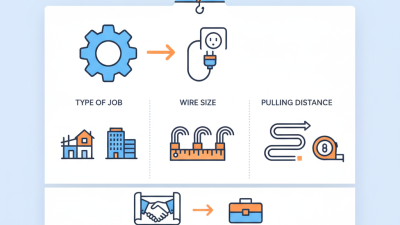
For global buyers, choosing the best wire puller requires more than comparing motor power or catalog prices. A suitable model should match cable diameter, pulling distance, conduit condition, and required tension. Picture a 30-meter conduit under a concrete floor. A weak machine may overheat, while excessive pulling force can damage insulation. Buyers should examine rated pulling capacity, speed control, emergency stopping, rope quality, drum design, noise, and replacement-part access. Important details matter.
International market studies, including reports from Grand View Research and MarketsandMarkets, continue to identify expanding wire and cable infrastructure as a major industrial trend. These reports support the need for efficient installation equipment, but they do not identify one universal product winner. Actual performance depends on jobsite conditions, operator experience, maintenance discipline, and regional service support. That point is easy to overlook. Compliance with relevant electrical, machinery, and workplace-safety requirements should also be verified before purchase. This guide compares practical criteria for selecting a wire puller that offers dependable performance, controlled force, and long-term value across global projects. Some recommendations may still require adjustment. Real worksites are rarely as clean as product brochures suggest.
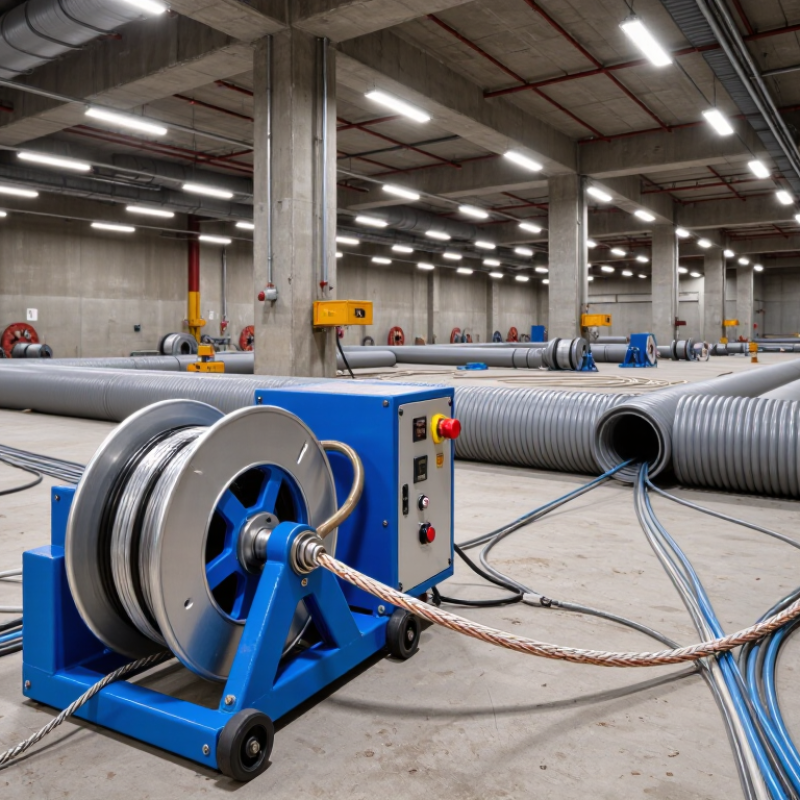
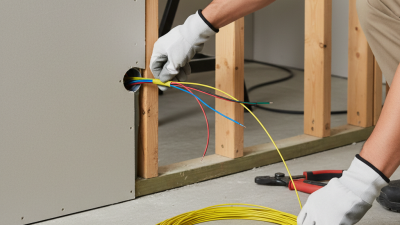
A China wire puller is a powered machine that draws cable through conduit, trays, or production equipment. It usually combines an electric or hydraulic motor, pulling rope, capstan, tension control, and a frame. The capstan grips the rope and transfers steady force to the cable. Operators adjust speed and pulling tension through a control panel. Some models also include overload protection and an emergency stop.
The equipment matters because cable installation is becoming more demanding. Grand View Research valued the global wire and cable market at about USD 216.4 billion in 2022, with growth expected through 2030. This expansion increases demand for faster and more controlled handling tools.
In practical sourcing tests, buyers should check pulling capacity, rope speed, motor duty rating, and compatibility with cable diameter. A larger motor is not always better. It may waste energy or damage delicate insulation.
For global buyers, a factory inspection should include a loaded trial, not only an empty-machine demonstration. Ask for test records, electrical drawings, material specifications, and replacement-part availability.
ISO 9001 certification can support process reliability, but it does not prove every machine performs well. That distinction is easy to miss.
The International Electrotechnical Commission also emphasizes safe cable-handling practices through relevant installation standards, yet field conditions still vary.
A careful buyer should leave a margin below the machine’s maximum pulling force. Maximum ratings can look impressive, but continuous performance is usually more useful.
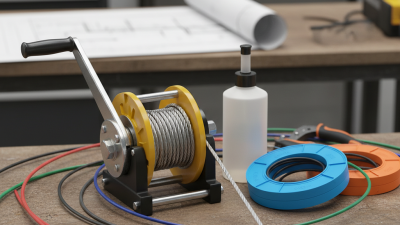
Global buyers can choose from several China wire puller types, depending on cable size, route length, and installation conditions. Manual fish tapes suit short conduit runs and light building wires. Ratchet pullers provide more controlled tension for indoor work. Electric cable pullers handle longer routes and repeated projects, while hydraulic models support heavier cables with steadier force. Some suppliers also offer gasoline-powered winches for remote construction sites.
The selection should follow measured pulling tension, not only motor power. IEC 60228 classifies conductor construction, but it does not define a safe pulling method. Buyers should request tension limits, drum capacity, line speed, emergency-stop details, and test records. Grand View Research valued the global wire and cable market at about USD 216.7 billion in 2023, with continued growth expected through 2030. IEA’s Electricity 2024 report also projects global electricity demand to grow by more than 3% annually from 2024 to 2026. These figures suggest stronger demand for practical installation equipment. Still, a bigger machine is not always better. Excessive force can damage insulation or bend a cable sharply. My field experience suggests that buyers often overlook pulling radius and operator control. That mistake is easy to repeat. Ask for a sample pulling test, preferably with your actual cable diameter and route length.
What Is the Best China Wire Puller for Global Buyers?
Comparing China wire pullers requires more than checking price and motor power. The International Energy Agency’s Electricity 2024 report forecasts global electricity demand to grow by about 4% annually through 2026. This growth increases demand for reliable cable installation equipment. Grand View Research estimates the global wire and cable market could reach about USD 271.6 billion by 2030. Therefore, buyers should compare pulling capacity, cable diameter range, line speed, and continuous operating time. A strong frame matters on uneven construction floors. So does stable tension control.
A lower quotation may look attractive. My early comparisons focused too heavily on price. That was a mistake. Check the rated pulling force, not only the peak value. Request load-test records, motor efficiency data, emergency-stop details, and maintenance instructions. Confirm whether the control panel supports your local voltage and frequency. For outdoor projects, inspect enclosure protection and corrosion resistance. Clear English manuals and available spare parts also show practical supplier experience. Ask for references from similar climates and cable sizes.
Tips: Build a comparison sheet before requesting quotes. Record net weight, noise level, warranty scope, delivery terms, and factory testing. Request videos showing the machine pulling a comparable cable. Do not accept vague claims. A small difference in speed can affect daily productivity, but excessive speed may damage cable surfaces. Some specifications still need field verification.
For global buyers, the best China wire puller is not simply the strongest model. It should meet verifiable quality standards for load safety, materials, and production control. ISO 12100 requires machinery risk assessment and risk reduction. Check whether the supplier identifies crushing points, cable slip, overload, and emergency stopping risks. Ask for test records using the actual pulling cable, not only a laboratory sample.
ISO’s Survey 2022 recorded more than 1.2 million ISO 9001 certificates worldwide. This shows the value of quality systems, but certification alone does not prove product performance. Request calibration records for load cells, batch numbers, inspection photos, and factory acceptance reports. For electrical models, review wiring protection and control-panel compliance with relevant IEC requirements. For cable conductors, IEC 60228 provides useful resistance and construction references. The machine may still fail in muddy conditions. That detail is often missed.
Tips: Confirm rated pulling capacity, continuous duty limits, braking performance, and spare-part availability. Ask for a witnessed load test before shipment. Compare the declared capacity with your real cable diameter and route length. A safety margin matters. I once treated a clean certificate as enough evidence; that was too optimistic. Suppliers should welcome independent inspection, even when the process feels slower. Check the manual’s language, warning labels, and traceability details before approving the order.
| Quality Dimension | Relevant Standard or Regulation | What the Requirement Covers | What Global Buyers Should Check | Recommended Evidence | Priority |
|---|---|---|---|---|---|
| Product classification and intended use |
ISO 12100 Machinery safety principles |
Risk assessment, reasonably foreseeable misuse, protective measures, and safety information for machinery. | Confirm whether the product is a hand-operated wire-rope puller, lever-operated pulling device, lifting device, or a winch. The rated application must be clearly defined before comparing capacity. | Product technical file, risk assessment, operating instructions, and clearly stated intended use. | High |
| Applicable-market conformity |
EU Machinery Rules Machinery Directive 2006/42/EC during the applicable transition period |
Essential health and safety requirements for machinery placed on the European market. Applicable legislation depends on the product type, date, and market. | Check that the conformity route matches the actual product classification. Do not accept a CE mark alone without a Declaration of Conformity and supporting technical information. | Signed EU Declaration of Conformity, technical documentation summary, user manual, and product identification details. | High |
| Rated capacity and working load limit |
Applicable lifting standard EN 13157 or ASME B30.21 where relevant |
Safety requirements for certain manually powered lifting equipment and lever-operated hoists. The applicable standard depends on the device design and use. | Verify that rated capacity, direction of pull, rope arrangement, and operating conditions are defined. A pulling capacity must not automatically be treated as a lifting capacity. | Capacity table, design calculations, test procedure, and traceable load-test records. | High |
| Proof-load and functional testing |
Applicable product standard Buyer-approved inspection plan |
Confirms that the assembled puller operates safely under its specified test load and that the mechanism, rope anchorage, hooks, and brake or holding system function correctly. | Require a defined test load, test duration, acceptance criteria, and serial or batch traceability. Confirm that testing covers complete assembled units, not only individual components. | Factory inspection report, calibrated test-equipment records, load-test certificate, and batch or serial-number linkage. | High |
| Wire-rope construction and condition |
ISO 2408 Steel wire ropes |
Requirements and information for the manufacture and designation of steel wire ropes, including rope construction and nominal characteristics. | Check rope diameter, construction, grade, lay, core type, end termination, and compatibility with the drum, sheave, jaw, or clamping mechanism. | Wire-rope certificate, material traceability, dimensional inspection report, and rope-construction specification. | High |
| Wire-rope inspection and replacement guidance |
ISO 4309 Care, maintenance, inspection, and discard of steel wire ropes |
Inspection practices, maintenance, lubrication, and discard considerations for steel wire ropes used with lifting appliances. | Ensure the manual explains inspection intervals, broken-wire or corrosion checks, kinking and crushing hazards, lubrication requirements, and replacement criteria. | Maintenance schedule, inspection checklist, discard guidance, and illustrated operating manual. | High |
| Hooks, eyes, shackles, and connectors |
Applicable component standard EN or ASME requirements according to market and component type |
Mechanical integrity, deformation resistance, retention features, and safe connection of load-bearing components. | Check hook throat opening, latch operation, pin fit, weld quality, visible markings, and compatibility with the rated capacity of the complete unit. | Component certificates, dimensional inspection, magnetic-particle or other suitable NDT records where specified, and visual inspection report. | High |
| Frame, jaws, gears, and brake mechanism |
ISO 12100 Design-risk reduction and guarding principles |
Protection against crushing, shearing, unexpected release, uncontrolled movement, and structural failure during normal operation. | Inspect casting or forging quality, gear engagement, jaw grip, return springs, handle strength, brake holding function, and protection from accessible pinch points. | Engineering drawings, material specifications, hardness records where applicable, functional test records, and inspection photographs. | High |
| Material and corrosion resistance |
Material specification Coating specification selected for the service environment |
Mechanical properties and resistance to corrosion appropriate for indoor, outdoor, humid, marine, or chemically exposed use. | Verify material grades for load-bearing parts, coating system, surface preparation, coating thickness, and any limitations for saltwater or corrosive environments. | Material certificates, coating data sheet, coating-thickness records, and salt-spray results when contractually required. | Medium |
| Markings and traceability |
Product safety information Applicable market-marking rules |
Permanent identification of the product, rated capacity, manufacturer or responsible economic operator, and relevant warnings. | Check that markings are legible, durable, and consistent with the manual, packaging, certificate, and purchase order. Confirm batch or serial traceability. | Marking photographs, nameplate artwork, serial-number register, and certificate-to-product traceability record. | High |
| Operating instructions and language |
ISO 12100 User information and residual-risk communication |
Safe installation, operation, inspection, maintenance, storage, transport, and disposal information. | Require instructions in the destination market language. The manual should state capacity limits, prohibited uses, rope installation, pre-use inspection, emergency release limits, and maintenance procedures. | Controlled user manual, translation review record, warning-label artwork, and revision history. | High |
| Ergonomics and manual handling |
ISO 12100 Risk reduction for manual operation |
Reduction of risks caused by excessive hand force, awkward posture, sharp edges, unexpected handle movement, and repetitive operation. | Check handle clearance, grip surface, operating force, hand pinch points, balance, and safe access to the release or reverse mechanism. | Ergonomic assessment, operating-force measurements, functional demonstration, and user instructions. | Medium |
| Quality-control consistency | ISO 9001 | Quality-management processes covering documented procedures, nonconformity control, corrective action, supplier control, and record retention. | Evaluate whether the manufacturing site has controlled incoming inspection, in-process checks, final inspection, calibration management, and complaint handling. | Valid quality-management certificate, process flow chart, inspection plan, calibration list, and recent nonconformity records with sensitive information removed. | Medium |
| Packaging and transport protection |
Buyer specification Destination-specific logistics requirements |
Protection against impact, moisture, corrosion, deformation, and loss of accessories during international transport and storage. | Check lifting points, rope protection, rust-prevention treatment, moisture barriers, carton strength, shock protection, and packing-list accuracy. | Packing specification, drop or vibration test results where required, photographs of packed units, and container-loading checklist. | Medium |
| Pre-shipment inspection and sampling |
ISO 2859-1 Sampling procedures for lot-by-lot inspection by attributes |
Statistical sampling principles for inspecting a production lot. The acceptable quality limit must be agreed contractually and is not a substitute for safety testing. | Define lot size, inspection level, critical defects, major defects, minor defects, and acceptance criteria before production. Safety-critical failures should receive stricter treatment than cosmetic defects. | Approved inspection plan, sampling record, defect classification, photographs, and signed pre-shipment inspection report. | Medium |

Note: The applicable standards depend on the puller's design, rated function, destination market, and whether it is used for pulling, lifting, or load positioning. Buyers should confirm the exact conformity route with a qualified compliance professional before purchase.
Choosing a reliable China wire puller supplier requires more than comparing prices. The product must match cable diameter, pulling length, working load, and jobsite conditions. Ask for rated capacity, brake performance, gear material, insulation details, and complete operating instructions. A supplier should provide batch records, material certificates, and test results from an identifiable laboratory. A polished catalog is not proof.
Industry demand supports careful sourcing. Fortune Business Insights valued the global wire and cable market at about USD 216.65 billion in 2023, with continued infrastructure growth projected through 2032. This does not measure wire pullers directly, but it signals sustained demand for dependable installation tools. Suppliers should therefore explain production capacity without hiding subcontracting. Request a factory video, sample unit, inspection checklist, and recent defect data. Test it.
ISO 9001 certification can indicate controlled processes, yet certification alone cannot confirm tool durability. The International Trade Centre also reports that electrical machinery remains a major traded product category, making traceability and export documentation increasingly important. Check carton strength, spare-part availability, warranty terms, and response time before placing a larger order. A small sample may reveal rough gears, weak handles, or unclear markings. Those details are easy to overlook. My own purchasing bias would be to trust measurable evidence first, although even a careful audit can miss problems appearing after months of field use.