Choosing the best fire alarm wire for global projects requires more than comparing price, conductor size, or delivery speed. The correct cable must match the alarm system, installation environment, and applicable certification requirements. A cable suitable for a dry office may fail in a damp plant room, a crowded ceiling, or a high-temperature service shaft.
Fire protection researcher John R. Hall Jr. emphasized the central purpose of alarm design: “The purpose of a fire alarm system is to provide timely warning of fire.” That principle keeps the discussion practical. Fire alarm wire is not merely a copper product. Its insulation, circuit integrity, flame performance, shielding, and temperature rating can influence whether a signal reaches the control panel when people need it most.
Global buyers commonly compare FPL, FPLR, and FPLP constructions. Riser-rated cable may suit vertical pathways, while plenum-rated cable is intended for air-handling spaces. Shielded versions can reduce interference near motors, elevators, and power equipment. Some projects also require low-smoke or halogen-free materials. Requirements vary by country and building type, so one “best” cable does not exist everywhere.
The difficult part is checking every detail. A lower-cost wire may create installation problems later. A premium cable may be unnecessary for a simple indoor route. Buyers should verify conductor resistance, insulation thickness, operating temperature, jacket markings, test reports, and third-party approvals. Ask for traceable documentation, not only attractive catalog language. One overlooked detail can matter. Even experienced teams sometimes specify the right cable for the wrong environment.
For global fire alarm projects, wire selection should begin with the approved installation standard, not price.
NFPA 72 defines performance and installation expectations for fire alarm systems.
NEC 760 addresses fire alarm circuit wiring, separation, power limits, and protection.
UL 1424 covers cables used in power-limited fire alarm circuits.
A suitable cable may carry FPL, FPLR, or FPLP markings, depending on the required location and fire exposure.
Cable construction matters inside real buildings.
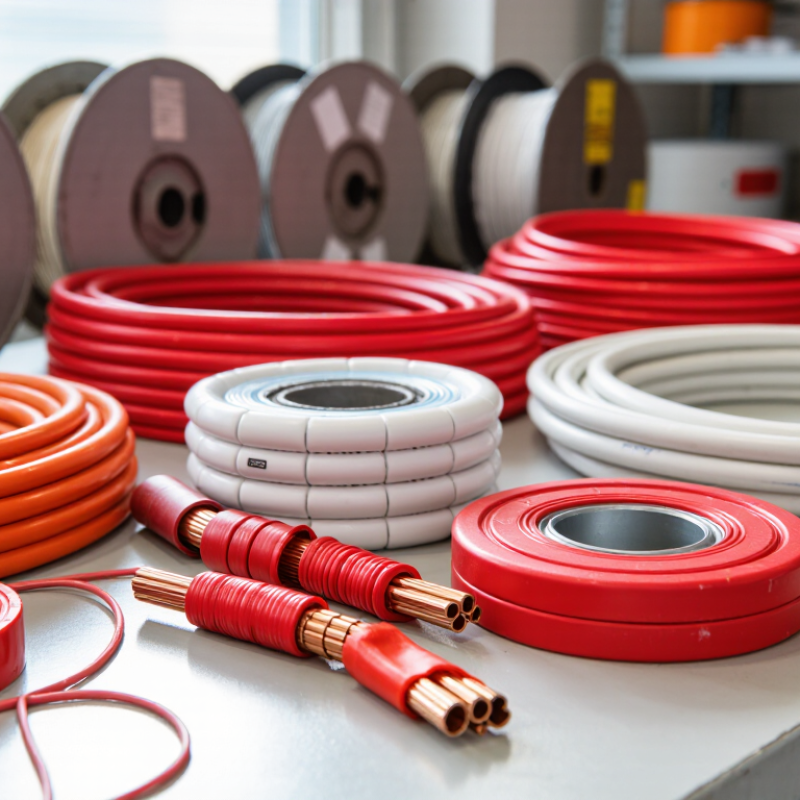
Plenum spaces may require low-smoke, flame-resistant cable. Vertical shafts can demand riser-rated cable. Check conductor size, insulation temperature, shielding, and voltage rating before ordering. The cable jacket should show clear markings, listing information, and traceable manufacturing details. Do not rely on a familiar-looking color. Red is common, but color alone proves nothing. Local authorities may adopt different editions or add regional requirements, so the authority having jurisdiction must review the final selection.
Tips:
Ask for current test reports and listing documents. Confirm whether the cable is power-limited or non-power-limited. Match the cable rating to the pathway, not just the control panel. Keep documentation with the project records. A common mistake is checking UL 1424 while overlooking NEC 760 separation rules. Another is assuming one cable type suits every country. It does not. Review the specification again. Small details can affect inspection approval and long-term alarm reliability.
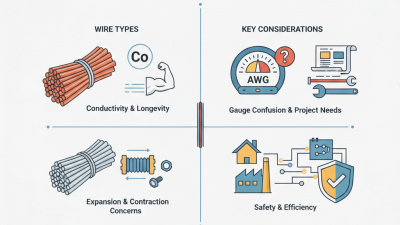
For global buyers, conductor material deserves close attention when selecting fire alarm wire. Copper and aluminum may share the same AWG size, but they do not offer the same electrical performance. Copper has lower resistivity, so it creates less resistance across the same length. At equal AWG, aluminum resistance is roughly 60% higher than copper. The difference matters.
Higher resistance can increase voltage drop along long notification or initiating circuits. It may reduce the voltage available to sounders, strobes, modules, or other connected devices. Copper also provides strong mechanical stability during termination. Its surface remains easier to prepare for reliable connections. Aluminum is lighter and can reduce material weight, but installers must consider expansion, oxidation, termination methods, and connector compatibility. Details matter.
A careful specification should compare AWG resistance, circuit length, operating temperature, current demand, and allowable voltage drop. The printed gauge alone is not enough. Designers should verify manufacturer test data and follow the applicable fire alarm standard and local authority requirements. In field inspections, loose terminations often cause more concern than the conductor label itself. That is an uncomfortable reminder. Material selection cannot replace workmanship.
Copper usually offers a wider performance margin for global projects, especially where cable runs are long or device loads vary. Still, it is not automatically the only acceptable choice. Aluminum may work when the system design, components, and installation procedures specifically support it. I would avoid choosing by purchase price alone. A cheaper conductor can create harder calculations, stricter installation demands, and less tolerance for mistakes.
The best fire alarm wire in 2026 depends on the installation environment, not a single cable label. Shielded cable helps control electromagnetic interference near motors, variable-speed drives, elevators, and heavy power circuits. Its drain wire needs careful termination, or the shield may create new noise paths.
Twisted conductors reduce induced interference by balancing the electrical field along the cable. This design often suits long notification or initiating circuits with nearby communication wiring. Keep twists consistent at junction boxes. A loose untwisted section can weaken the protection. Small details matter.
Plenum cable is different. It addresses smoke and flame behavior inside air-handling spaces, such as return-air ceilings and ventilation shafts. It does not automatically provide strong EMC control. Some projects need plenum-rated, shielded, twisted cable together. Check the local fire code, building code, cable listing, conductor size, and authority requirements before ordering.
On site, cable routing is often the real weakness. A compliant cable can still suffer when it shares a tray with noisy power conductors or passes beside a transformer. Maintain separation, support the cable properly, and avoid sharp bends that damage insulation or shielding. I have seen specifications choose shielding too quickly, while ignoring airflow zones. That decision deserves a second review. Test circuits after installation, especially where long runs cross crowded mechanical rooms.
2026 Best Type of Fire Alarm Wire for Global Buyers?
A two-hour fire alarm circuit is more than a cable label. Under NFPA 72, pathway survivability focuses on keeping critical circuits operational during a fire. A two-hour pathway may require a listed cable system, protected raceway, or tested enclosure. The complete installation matters, including supports, joints, penetrations, and separation from other services.
IEC 60331 mainly evaluates circuit integrity during fire exposure. The exact test method, duration, mechanical impact, and water conditions depend on the applicable IEC 60331 part. A cable tested for 120 minutes is not automatically equivalent to a two-hour NFPA 72 pathway. This difference is often missed. An engineer should compare the full test report, not only the printed rating. Local authorities may also request approved installation details. Field inspections repeatedly show that weak splices and unprotected penetrations can defeat an otherwise strong cable.
Tips: Ask suppliers for the standard edition, test duration, conductor size, voltage rating, and complete installation method. Confirm whether the evidence covers the assembled pathway. Check firestop materials and cable supports on site. A small document gap can delay approval. Yet a perfect certificate cannot fix careless installation. That point deserves more attention.
| Evaluation Dimension | NFPA 72 Pathway Survivability | IEC 60331 Cable Fire-Resistance Test | Buyer Relevance |
|---|---|---|---|
| Primary purpose | Defines survivability expectations for fire alarm pathways and their installation method. | Tests whether a cable circuit maintains circuit integrity during a specified fire exposure. | NFPA 72 addresses the installed pathway; IEC 60331 primarily addresses the cable test performance. |
| Two-hour reference | Pathway Survivability Level 3 is associated with a 2-hour survivability objective where required by the adopted code and system design. | Current IEC 60331-1 and IEC 60331-2 fire tests generally use a 120-minute exposure for applicable cable categories. | A 120-minute IEC cable test should not automatically be described as a complete NFPA 72 two-hour pathway rating. |
| Typical fire-test temperature | NFPA 72 pathway survivability depends on the listed or approved pathway protection method; it does not prescribe one universal cable-only furnace temperature. | IEC 60331-1 and IEC 60331-2 use a nominal 830°C flame exposure in the current 120-minute fire-integrity test configuration. | Check the exact edition, part number, cable diameter range, and test report before comparing products. |
| Mechanical impact during fire | The required pathway solution may include protected routing, listed assemblies, or other approved construction capable of maintaining the pathway. | Relevant IEC 60331 procedures can include mechanical shock/impact during fire; the applicable procedure depends on the cable type and standard part. | Do not compare “fire only” and “fire plus impact” results as equivalent test conditions. |
| Water exposure | Water exposure may be relevant to the selected pathway design, fire-protection system, or authority requirements. | Water-jet or water-exposure conditions are addressed only where specified by the applicable IEC 60331 test procedure; they are not universal to every cable test. | For sprinklered buildings or wet locations, verify the exact environmental test sequence and installation instructions. |
| What is actually being rated? | The complete fire alarm pathway, including cable, supports, routing, protection, terminations, and continuity requirements as applicable. | The cable’s ability to maintain electrical circuit integrity under the specified laboratory conditions. | A fire-resistant cable may still require a compliant support system, separation, penetration treatment, and approved installation method. |
| Circuit voltage during test | Determined by the fire alarm equipment and pathway design; NFPA 72 is not a single cable-furnace voltage test. | IEC 60331 tests use a connected electrical circuit and specified test current/voltage conditions defined by the applicable part and edition. | Confirm that the tested cable construction is suitable for the actual signaling, notification, or voice-evacuation circuit. |
| Cable construction considerations | Cable selection must match the required pathway type, circuit class, installation environment, and local listing or approval requirements. | IEC 60331-1 applies to larger-diameter cables and IEC 60331-2 applies to smaller-diameter cables within their respective scopes. | Verify conductor size, insulation system, shield/drain-wire design, overall diameter, bend radius, and termination compatibility. |
| Best use case | Projects designed, reviewed, or inspected under NFPA-based fire alarm requirements in jurisdictions adopting the relevant NFPA 72 edition. | Projects requiring an IEC-based fire-resistant cable test, especially where local regulations or specifications cite IEC 60331. | Select the compliance route required by the project jurisdiction rather than choosing solely by the “2-hour” label. |
| Documentation to request | Listing or approval documentation, pathway survivability evidence, installation instructions, and applicable system compatibility information. | Test report or certificate identifying the exact IEC 60331 part, edition, cable construction, test duration, temperature, mechanical conditions, and circuit-integrity result. | A generic certificate or marketing statement is insufficient for a project-specific compliance decision. |
| Overall comparison | 2-hour survivability is a pathway-level design objective. | 120-minute circuit integrity is a cable-test result under defined IEC conditions. | The two descriptions are related but not automatically interchangeable. |
Important: Requirements can vary by the adopted code edition, authority having jurisdiction, project specification, cable listing, and installation method. Always verify the complete pathway—not only the cable—before claiming two-hour fire alarm circuit survivability.
For global buyers, fire alarm wire selection should begin with the installation, not a catalog headline. In project reviews, I check system voltage, conductor size, insulation, shielding, and circuit length together. A 300 V cable may suit one low-voltage loop, yet fail a specification requiring 600 V. Confirm the equipment manufacturer’s limits and local electrical code. Voltage is only one filter.
Temperature ratings need equal attention. A cable marked 90°C may tolerate normal ambient heat, but that does not guarantee fire survival. Ask whether the project needs circuit integrity, flame resistance, smoke control, or ordinary flame-retardant performance. CPR classification matters in European projects. Check the declared reaction-to-fire class, smoke level, flaming-droplet rating, and acidity category. Request the declaration of performance and test evidence. Documents can be incomplete. Check twice.
RoHS helps screen restricted substances, but it does not replace safety approval. Compare test dates, factory traceability, markings, and batch documents. Local approvals may require national listings, specific labels, or an authorized inspection route. A certificate from another market may not transfer. Technically sound cables can still face delays when paperwork arrives late. Build a matrix with pass, pending, and not applicable fields. Leave room for doubt.