How to Choose the Right Press Brake at the 2026 Canton Fair?
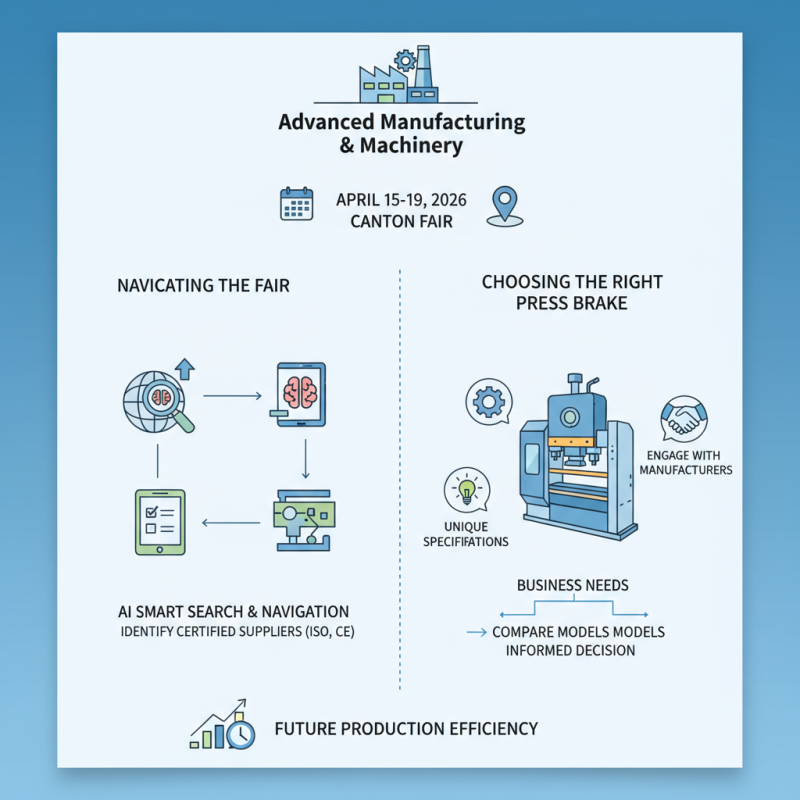
Choosing the right Press Brake is crucial for manufacturers. At the 2026 Canton Fair, visitors will find numerous options. This can be overwhelming. The fair covers advanced manufacturing and machinery from April 15 to April 19.
With over 1.55 million square meters of exhibition space, it's essential to navigate efficiently. AI smart search and navigation features will help buyers identify suppliers meeting certifications like ISO and CE. This innovative technology can streamline the decision-making process.
However, not all press brakes are the same. Each has unique specifications and features. It's vital to consider the specific needs of your business. Take the time to compare different models. Engaging with manufacturers on-site may reveal information you cannot find online. The right choice today can significantly impact your production efficiency in the future.
Factors to Consider When Selecting a Press Brake
When attending the 2026 Canton Fair, selecting the right press brake is crucial. Key factors should guide your choice. Consider the bending capacity. Determine the thickness and type of materials you will work with. A press brake with insufficient capacity can lead to failures.
The working length is another essential aspect. It influences the size of the workpieces you can handle. Don't forget to assess the machine's accuracy. Precision affects the quality of your final product.
Tips: Check if the press brake has a reliable control system. Complex controls can slow down the workflow. Also, evaluate the machine’s overall construction. A sturdy design ensures longevity and reduces maintenance costs. These elements can make a difference in performance.
Understanding Different Types of Press Brakes Available
When choosing a press brake at the 2026 Canton Fair, understanding the different types is essential. Common types include hydraulic, mechanical, and electromagnetic press brakes. Each type offers distinct advantages based on flexibility, force, and application. Hydraulic press brakes are versatile and can handle thick materials, while mechanical press brakes excel in speed and efficiency. Electromagnetic options are growing in popularity due to their precision.
**Tips:** Consider the material thickness you'll work with. This impacts the type of press brake needed. Hydraulic machines are ideal for thicker metals, where mechanical units suit lighter tasks. Research indicates that up to 40% of manufacturers prefer hydraulic systems for their adaptability.
Look at the machine’s features. Size matters too. Bigger is not always better; it might limit your workspace. Some users report challenges with accuracy in larger models. They find that smaller, precise machines are often more reliable.
**Tips:** Evaluate training requirements for operators. A simple interface may prevent training gaps. Equipment that is challenging to use may slow down production. Reports show a clear link between usability and productivity. All these factors are crucial in making the right choice.
Evaluating Press Brake Specifications and Performance
Choosing the right press brake requires careful evaluation of specifications and performance. At the 2026 Canton Fair, it's essential to consider the bending capacity. Many machines can handle various materials, but specifications can differ widely. Pay attention to the maximum tonnage. For instance, a report from the International Metalworking Company indicates that 60% of manufacturers opt for machines with at least 100 tons of capacity.
Another crucial aspect is the precision of the machine. Tolerance levels can affect your production quality significantly. High-quality press brakes typically offer tolerances as tight as ±0.5 mm. This precision can be vital, especially in industries where accuracy is non-negotiable. Do not overlook the control systems. A user-friendly interface can enhance operational efficiency.
Tips: Always verify the build quality. A poorly constructed machine may not perform as expected. Look for user reviews and demo opportunities. Test the machine under real conditions. Check if the warranty covers essential parts. This can actually save you on repairs if issues arise later.
Assessing Budget and Cost-Effectiveness of Press Brakes
When selecting a press brake at the 2026 Canton Fair, budget and cost-effectiveness are critical factors. The initial purchase price can vary significantly. On average, the cost of a quality press brake ranges from $25,000 to $100,000. It's important to assess not only the purchase price but also the long-term operational costs.
Consider energy consumption. According to industry reports, modern hydraulic press brakes can consume up to 25% less energy than older models. This reduction translates into savings on utility bills over time. Maintenance costs should also be evaluated. An often overlooked detail is the availability of spare parts and service support. Without easy access, repair costs can escalate quickly.
Additionally, the return on investment (ROI) can differ based on the type of work performed. Companies focused on high-volume production may find higher upfront costs justified. Conversely, those with smaller projects might struggle to realize the same ROI. It's essential to analyze specific production requirements. Not all press brakes are suited for every task. Understanding these factors helps in finding a machine that balances initial cost with long-term value.
Cost-Effectiveness of Different Press Brakes at the 2026 Canton Fair
Key Features to Look for in a Press Brake at the Canton Fair
When choosing a press brake at the 2026 Canton Fair, several key features should guide your decision. Accuracy is paramount. A machine with a repeatability of ±0.01 mm can enhance your production efficiency. Many recent studies indicate that precise bending increases overall output by up to 30%. This means less waste and higher profitability for your business.
Consider the machine's tonnage and bending length. A 250-ton press brake can handle most mid-sized applications. A smaller machine may limit your capabilities and require frequent upgrades. Flexibility in bending different materials is another valuable feature. Some reports show that versatility in material types increases operational productivity by more than 40%. This ensures that your press brake adapts to various projects without needing constant modifications.
Additionally, pay attention to the control system. A user-friendly interface with advanced programming options can significantly reduce operator training time. Studies have shown that intuitive controls can decrease setup duration by nearly 20%. However, it's crucial to remember that more features may complicate user experience. Balancing advanced technology with simplicity is vital for effective operation.
How to Choose the Right Press Brake at the 2026 Canton Fair? - Key Features to Look for in a Press Brake at the Canton Fair
| Feature | Importance | Specifications |
| Bending Capacity | Determines the thickness and type of material that can be bent. | Up to 300 tons for heavy-duty; 30 tons for light-duty. |
| Machine Width | Affects the size of the sheets you can work with. | Available from 1m to 6m depending on model. |
| Control System | Facilitates precision and automation in operations. | CNC systems with touchscreen interfaces are preferred. |
| Back Gauge System | Improves accuracy in positioning the material. | Single-axis and multi-axis configurable options. |
| Safety Features | Ensures operator and equipment safety during operation. | Includes safety lights, emergency stops, and guards. |
| Power Source | Affects energy consumption and operational efficiency. | Electric vs. hydraulic options available. |
| Maintenance Requirements | Influences total cost of ownership. | Regular checks, oil changes, and part replacements. |