How to Choose the Right Cable Harness for Your Project?
Choosing the right cable harness for your project is crucial. It can affect both performance and reliability. A well-designed cable harness facilitates smoother connections and enhances overall system efficiency. Understanding the specific requirements of your project helps in making informed decisions.
Different applications require different types of cable harnesses. Factors such as flexibility, heat resistance, and durability must be considered. It’s not just about picking any harness off the shelf. You need to analyze the environment where it will be used. This includes vibrations, exposure to chemicals, and temperature variations. These elements can significantly impact the cable harness's performance over time.
Lastly, don’t overlook the importance of proper installation. Even the best cable harness can malfunction if not installed correctly. This step often requires technical expertise. If mistakes are made here, it could lead to costly delays or failures. Thus, investing time in selecting the right cable harness pays off in the end.
Understanding the Basics of Cable Harnesses
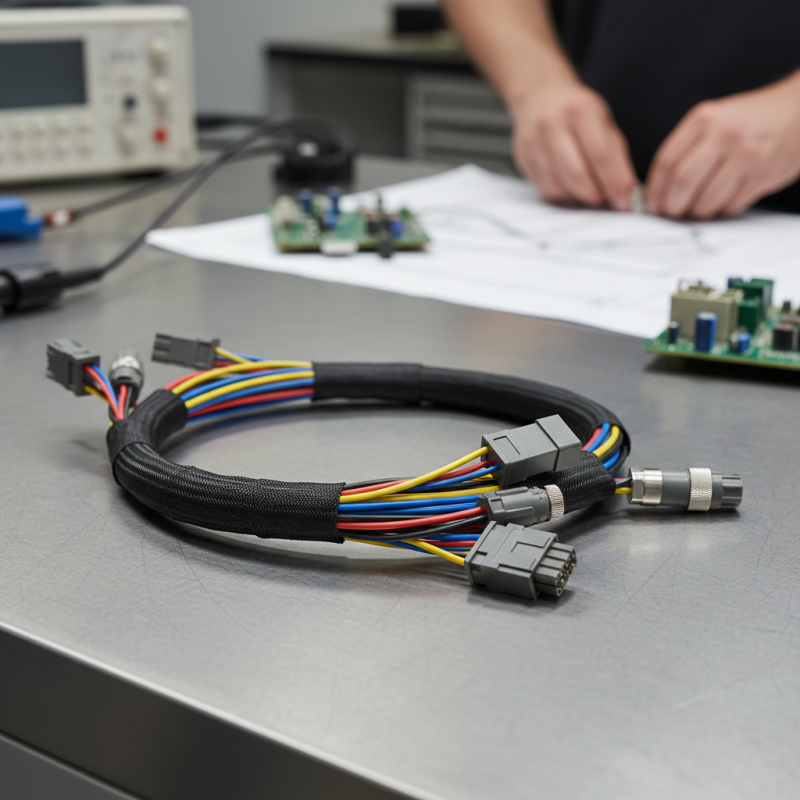
When embarking on a project that requires a cable harness, understanding the basics is essential. A cable harness serves as a systematic way to organize multiple wires. You’ll often find harnesses in automotive, aerospace, and industrial applications. Each harness is designed for specific tasks and environments, so knowing your needs is crucial.
Consider the number of wires you need to bundle. This can influence both the design and the materials used. It’s also important to think about the environment the harness will be used in. Will it be exposed to moisture or extreme temperatures? These factors dictate the choice of insulation and protective coverings.
Tips: Assess the space where the harness will be installed. Limited space can complicate wire management. Use colored wires to simplify identification. Finally, consult experts who can offer insights based on experience. Remember, an inappropriate choice can lead to failures. Reflect on potential mistakes to avoid repeating them. A little planning can go a long way.
Identifying Your Project Requirements
When selecting the right cable harness for your project, start by clarifying your requirements. Consider the environment where the harness will operate. Will it be exposed to moisture, extreme temperatures, or vibration? According to a report by Research and Markets, the global cable harness market is projected to reach USD 44.6 billion by 2025. This growth highlights the importance of reliable cable solutions tailored to specific environments.
Analyze the electrical specifications. How much current will the harness carry? Look into wire gauge and insulation types. A report from MarketWatch emphasizes understanding these metrics, as mismatched specifications can lead to failures. Think about the connectors needed too. Will standard connectors suffice, or will custom options be better? Data suggests that around 30% of issues arise from incorrect connector types.
It’s also vital to evaluate the future scalability of your project. Will the cable harness need to adapt as your project evolves? Flexibility in design can save costs later. Exploring these factors shows that while selecting a cable harness seems straightforward, it requires careful consideration of varying project needs and specifications.
How to Choose the Right Cable Harness for Your Project
This bar chart illustrates the percentage of different cable types used in various projects based on specific requirements. Use this data to identify which cable harness may suit your project's needs best.
Factors to Consider When Selecting a Cable Harness
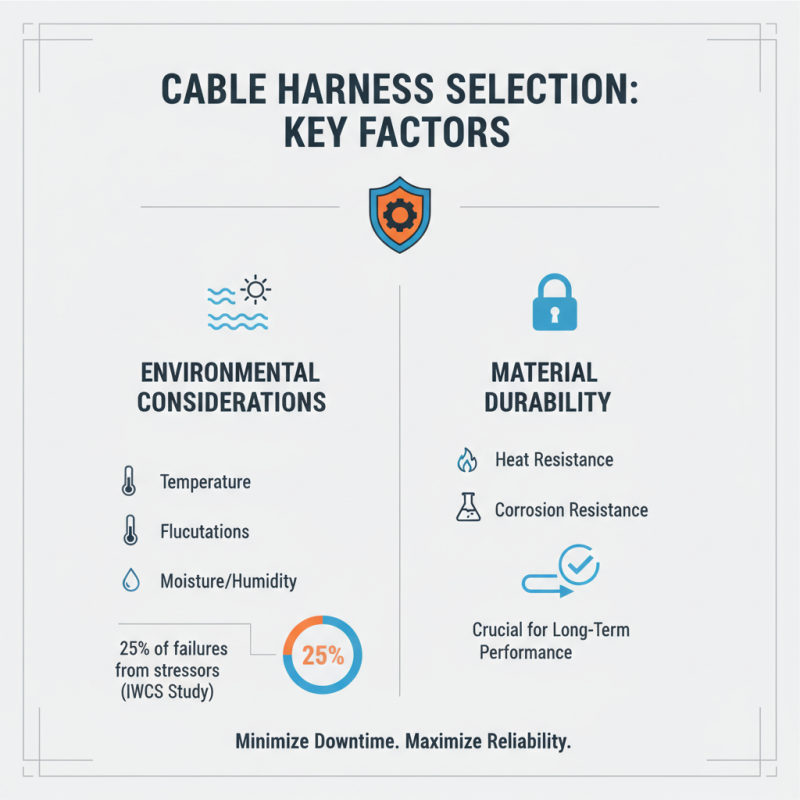
When selecting a cable harness, several factors must be considered. The environment where the harness will operate is crucial. For instance, temperature fluctuations and exposure to moisture can affect the performance of cables. A study by the International Wire & Cable Symposium indicates that 25% of cable failures stem from environmental stressors. Choosing materials that resist heat and corrosion is vital for durability.
Next, the electrical requirements of your project cannot be overlooked. Understanding voltage ratings, current capacity, and impedance is essential. The Electrical and Electronics Engineers Association reports that improper specifications can lead to overheating, which is responsible for 30% of electrical faults. Matching the harness design to your project's unique electrical needs ensures optimal performance.
Connector types also play a pivotal role. Compatibility with existing systems facilitates integration. However, mismatches can lead to increased maintenance costs. Industry trends suggest that nearly 20% of harnesses require modification after initial installation due to improper connector choices. Careful planning and consultation with experts mitigate these risks, ultimately enhancing the reliability of your project.
Types of Cable Harnesses and Their Applications
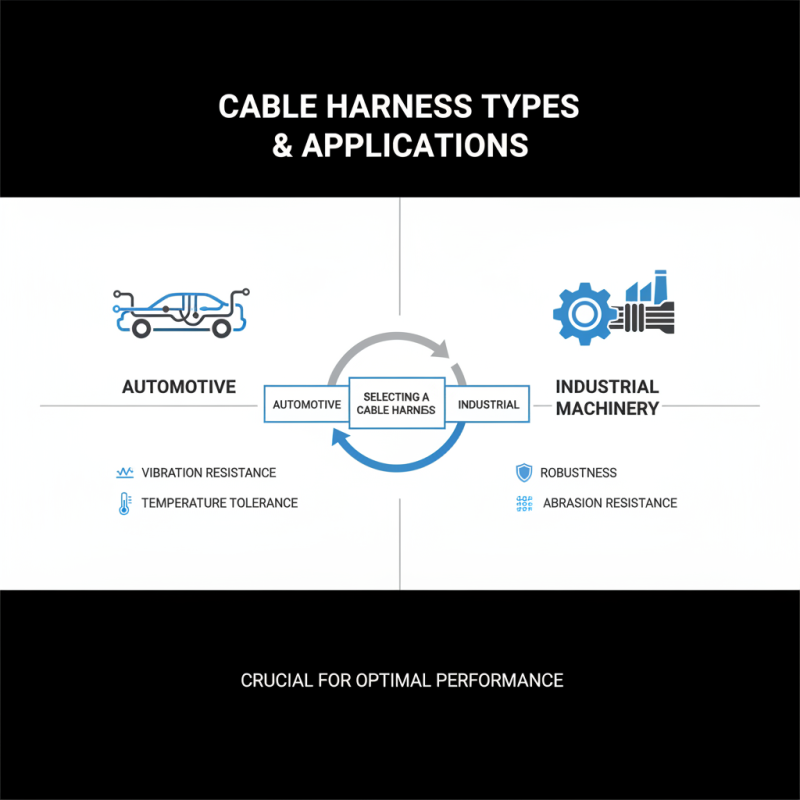
When selecting a cable harness, understanding its types and applications is crucial. There are several categories to consider. For example, wire harnesses for automotive applications differ significantly from those used in industrial machinery. Automotive wire harnesses often need to withstand vibrations and varying temperatures. In contrast, industrial harnesses may focus more on robustness and resistance to abrasion.
Custom cable harnesses are often tailored to specific projects. These harnesses can enhance functionality and efficiency. Many projects benefit from a flexible design that allows easy adjustments. However, not all projects require custom solutions. Sometimes, off-the-shelf options suffice and can save costs. It's essential to weigh the benefits and drawbacks of both approaches.
Choosing the right type also involves considering factors like weight, space, and durability. Simple harness designs might look appealing but can lead to issues later. Evaluate each option carefully. An incorrect choice can result in downtime and increased expenses. The decision-making process needs patience and reflection.
Optimizing Cost and Quality in Cable Harness Selection
Choosing the right cable harness can be challenging. It impacts your project's performance and budget. Many factors must be balanced for an optimal selection.
To optimize cost and quality, understand the specific needs of your project. Begin with clear specifications. Know the environmental conditions the harness will face. This includes temperature, moisture, and exposure to chemicals. Poor decisions can lead to costly failures, so research is essential. Use reliable materials that meet industry standards.
Think about scalability and future needs. A harness designed for one application might not suit another. Consider the possibility of upgrades or changes in technology. The right choice today may not be ideal tomorrow. A flexible approach in design allows for adjustments, saving costs long-term. Validate your choice through prototypes. Testing can reveal weaknesses before full-scale production. Mistakes in the selection of a cable harness can lead to setbacks. Reflecting on past projects can guide you in making better decisions in the future.
How to Choose the Right Cable Harness for Your Project?
| Criteria |
Description |
Cost Factor |
Quality Factor |
| Material Type |
Copper, Aluminum, or Fiber Optic |
Varies based on type
Copper is costlier |
Copper offers superior conductivity |
| Wire Gauge |
Thickness of the wire used |
Larger gauge can increase cost |
Larger gauge can handle more power |
| Connector Type |
Different connectors have varying capabilities |
Specialty connectors are usually more expensive |
Compatibility and durability vary greatly |
| Cable Length |
The overall length of the harness |
Longer lengths can increase costs |
Shorter lengths can reduce signal loss |
| Environmental Rating |
Protection against moisture, heat, etc. |
Enhanced protection costs more |
Higher ratings provide better longevity |