2026 How to Choose the Right Wire Tray for Your Needs?
Choosing the right wire tray can be challenging. Different needs require different solutions. According to Mark Johnson, a leading expert in the wire tray industry, “Selecting the correct wire tray is crucial for safety and efficiency.” His insight reflects the importance of understanding your specific requirements.
Wire trays come in various materials and designs. The wrong choice can lead to unforeseen issues like equipment damage or safety hazards. For instance, a tray that does not support the weight of cables may collapse, causing disruptions. Additionally, some trays are better suited for indoor use, while others excel outdoors.
This complex decision-making process often results in confusion. Many individuals underestimate the impact of their choice. Consider your unique needs carefully. Reflect on factors like load capacity and installation location before making your final decision. The right wire tray can enhance your project, while the wrong one may hinder it. Choose wisely.

Understanding Wire Tray Types: A Comprehensive Overview
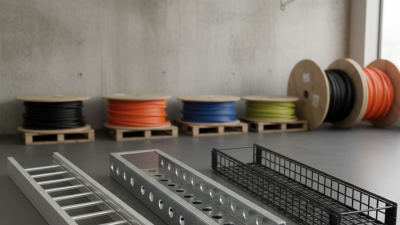
When selecting a wire tray, understanding the various types available is crucial. Wire trays come in different shapes and sizes, each designed for specific applications. For example, ladder trays are suitable for large cable volumes, while basket trays accommodate smaller cables. According to industry reports, cable management systems can improve efficiency by up to 30%.
It's essential to consider material types as well. Steel wire trays offer robust support, while plastic options are lighter but may not handle heavy loads. Think about the environment too. Will your tray face moisture or chemicals? This clarity helps in making informed choices.
Tips: Always assess the weight of the cables. Knowing this can prevent overloading. Choose a tray with proper ventilation. This helps maintain the integrity of the wires. Finally, don’t forget to plan your installation layout carefully. A disorganized setup can lead to future headaches. Planning goes a long way in ensuring effectiveness.
2026 How to Choose the Right Wire Tray for Your Needs?
| Wire Tray Type |
Material |
Load Capacity (lbs) |
Best Use Cases |
| Ladder Tray |
Steel |
1000 |
Data centers, heavy-duty applications |
| Basket Tray |
Aluminum |
500 |
Cable management, commercial buildings |
| Channel Tray |
PVC |
300 |
Residential wiring, low voltage applications |
| Solid Bottom Tray |
Steel |
800 |
Industrial environments, oil & gas |
Key Considerations When Selecting Wire Trays for Electrical Systems
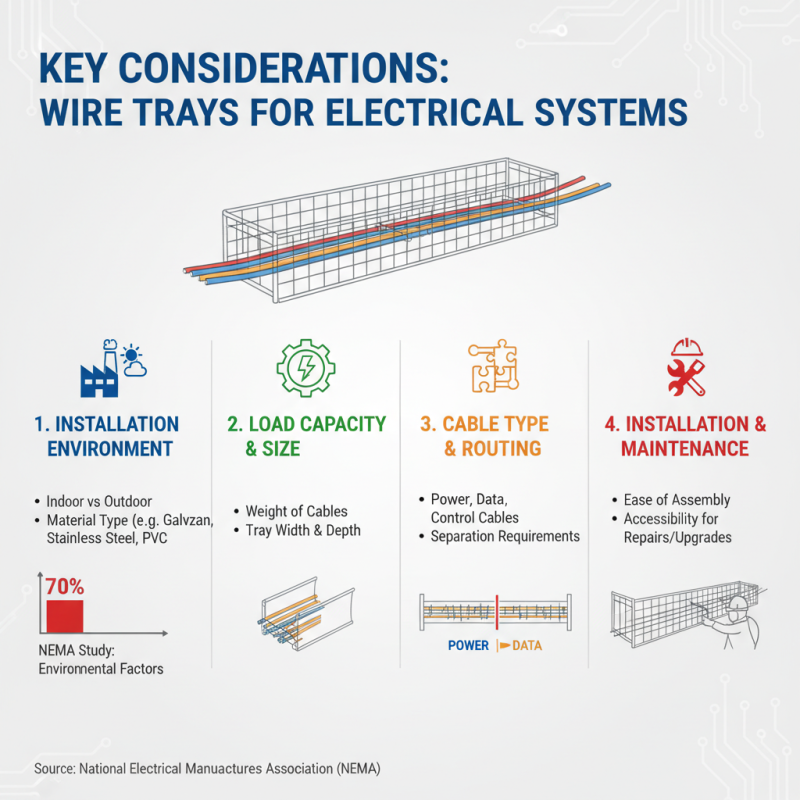
When selecting wire trays for electrical systems, several key considerations come into play. First, the type of installation environment matters. For instance, indoor installations may require different materials compared to outdoor setups. A study by the National Electrical Manufacturers Association (NEMA) suggests that about 70% of installations must consider environmental factors.
Load capacity is another critical aspect. Wire trays must support the weight of cables without sagging. According to the Electrical Safety Foundation International (ESFI), incorrect load management can lead to cable damage or system failure. Check the specifications carefully.
Tips: Always assess your infrastructure. Determine the weight and volume of cables before making your selection. Choose trays that accommodate future expansion.
Finally, consider the ease of maintenance. Wire trays that allow quick access can save time during repairs. A flexible design benefits ongoing changes in your system. Awareness of these factors can elevate the overall efficiency of electrical installations.
Analyzing Load Capacity and Material Strength in Wire Trays
When selecting a wire tray, understanding load capacity is crucial. Wire trays come in various sizes and materials. Each type has a specific weight limit. Overloading a tray can lead to failure. Consider the weight of cables and other components you plan to use. It’s vital to be realistic about your needs.
Material strength is equally important. Steel trays are known for their durability. However, aluminum trays are lighter and easier to install. Choose the material that fits your project. A tray that seems strong may not handle specific conditions well. Be aware of environmental factors like humidity and temperature. They can affect the material's performance.
Sometimes, you may think a tray will suffice. But reality often proves different. Testing load limits can save future headaches. Don't hesitate to consult experts or resources. Your choice impacts the safety and longevity of your installation. Take your time to analyze and rethink your options.
Load Capacity Analysis of Different Wire Tray Materials
Industry Standards and Regulations for Wire Tray Installation
When considering wire tray installation, adhering to industry standards is crucial. The National Electrical Code (NEC) provides guidelines for electrical installations. According to the NEC, wire trays must be listed and labeled for proper use. This ensures safety and compliance. Non-compliance can lead to hazards and financial losses.
The American National Standards Institute (ANSI) outlines specifications for wire trays. These standards emphasize load capacities and material durability. A recent report found that improper installation can reduce the load capacity by up to 30%. Thus, knowing installation requirements is vital.
Many professionals overlook space for future upgrades. Anticipating needs is essential. Accessible pathways enhance maintenance. Without solid planning, you may face unnecessary costs later. Future-proofing your installation can save money and effort in the long run.
Common Applications and Best Practices for Wire Tray Use
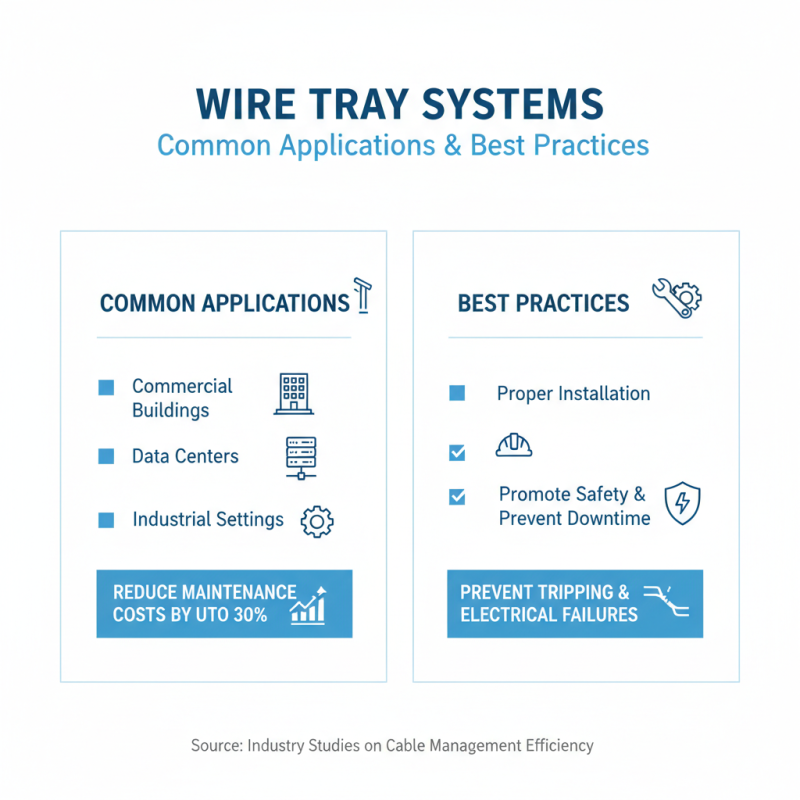
When selecting a wire tray, understanding common applications is crucial. Wire trays are often used in commercial buildings, data centers, and industrial settings. In fact, studies indicate that efficient cable management can reduce maintenance costs by up to 30%. Proper installations promote safety and prevent expensive downtimes caused by tripping hazards or electrical failures.
In industrial environments, wire trays can withstand heavy loads. They need to be made of quality materials. However, not all trays are created equal. A report from the Electrical Contractor Association highlights that inadequate tray support can lead to sagging or bending, impacting both aesthetics and functionality. This often leads to a reevaluation of the load-bear capabilities.
Best practices for wire tray use should not be overlooked. Positioning trays close to pathways enhances accessibility. Properly spacing supports can minimize strain on cables. Still, many underestimate strain relief, which is essential in preventing cable damage. Experts suggest periodic inspections. Despite this, many facilities neglect maintenance, risking costly repairs.