Top 10 Electric Cable Wire Types You Should Know?
When it comes to electrical work, understanding electric cable wire types is crucial. The right choice can affect safety, efficiency, and functionality. Different projects require different kinds of wires, and knowing the options is essential for anyone involved in electrical installations.
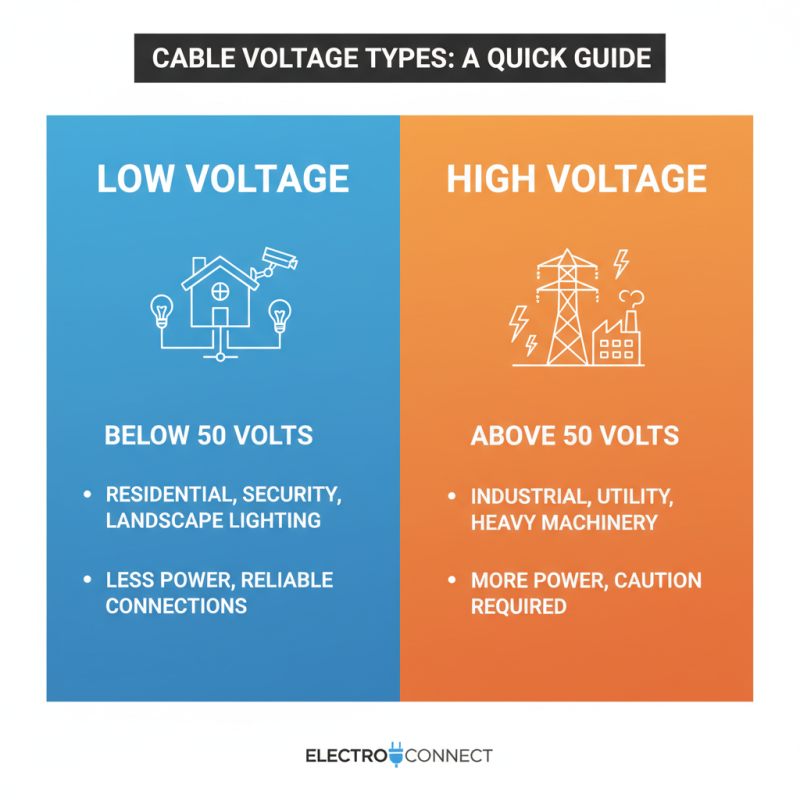
Electric cable wire types vary widely. Some wires are designed for high-voltage applications, while others suit low-voltage needs. Familiarity with these wires helps prevent costly mistakes. For instance, using the wrong wire type can lead to overheating or short circuits.
However, navigating this landscape can be tricky. Many individuals struggle to differentiate between wire types. Misunderstandings can arise, and errors may occur. It’s vital to seek reliable information on electric cable wire options. By doing so, one can ensure safer and more effective wiring decisions in any project.
Top 10 Electric Cable Wire Types You Should Know
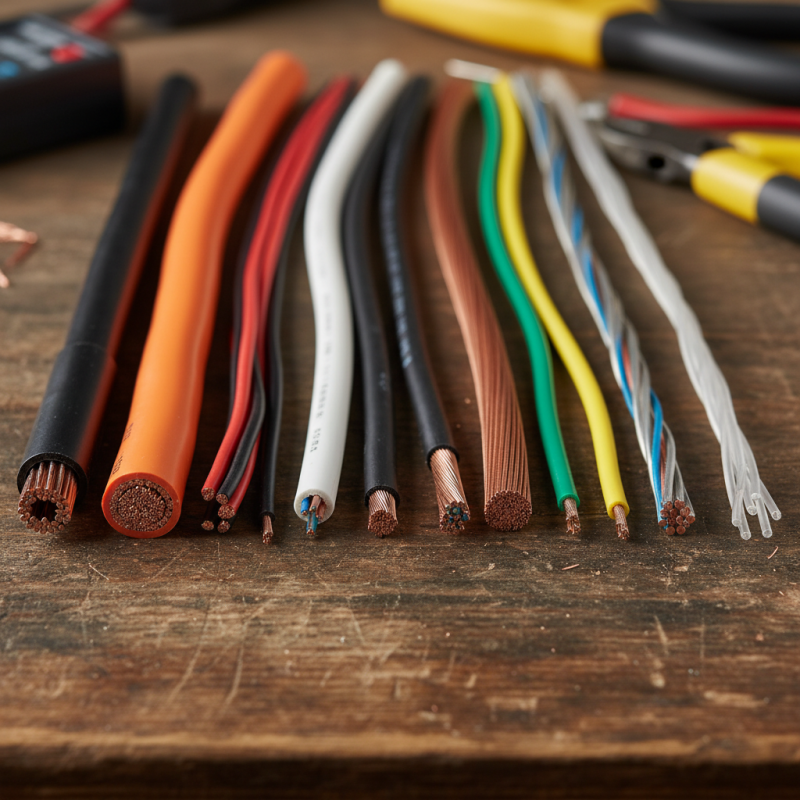
Electric cable wires come in various types, each designed for specific applications. Understanding these types is crucial for anyone involved in electrical work. For instance, a common type is THHN wire. It is used in building automation. Its nylon coating offers durability against heat and moisture.
Another notable type is UF wire. This wire is useful for underground installations. It is resilient, and its insulation can withstand harsh conditions. However, working with UF wire may require extra care to ensure proper installation. Then there’s NM cable, ideal for residential wiring. This type is lightweight, but its exposure to moisture can be an issue.
Some wires, like service entrance cable, need to meet strict standards. If not installed correctly, the consequences can be severe. It's essential to consider the environment in which each wire will operate. Different types have specific ratings for voltage and temperature. Knowing these details helps prevent potential hazards. Each type of wire presents its own challenges and learning opportunities.
Understanding Different Types of Electric Cables: A Comprehensive Overview
Understanding different types of electric cables is essential for anyone working with electrical systems. Various cables serve specific purposes, and knowing their characteristics can enhance safety and efficiency. For instance, PVC-insulated cables are common in residential settings. They are affordable and versatile. However, they may not withstand high temperatures.
Another type is the rubber-insulated cable. It's flexible and excellent for outdoor use. Yet, it can degrade faster if exposed to harsh weather conditions. Selecting the right cable often requires careful consideration. Missteps can lead to inefficiencies or hazards.
**Tip:** Always check the temperature rating of your cables. It impacts their performance and lifespan.
Consider also the importance of gauge size. The gauge affects the electrical flow. A thicker gauge can handle greater currents. However, using excessively thick cables can be overkill and cumbersome to install.
**Tip:** Use the appropriate gauge to balance safety and cost.
The proper cable type can make a significant difference. Still, it's essential to avoid assumptions. Regularly review your cable choices, and remain open to adjustments. Better choices lead to safer and more effective setups.
Top 10 Electric Cable Wire Types You Should Know
Key Specifications of Copper vs. Aluminum Electric Wires in Applications
When choosing electric wires, understanding copper and aluminum options is essential. Copper wires are known for their excellent conductivity. They can carry more electrical current than aluminum wires of the same size. This makes them a popular choice in high-demand applications. However, copper is often more expensive. This can be a significant factor for budget-conscious projects.
On the other hand, aluminum wires are lighter and easier to handle. They are also more affordable than copper. But, aluminum has its drawbacks. It has a lower conductivity and can be prone to oxidation. This can lead to connection issues if not properly addressed. In some cases, using aluminum wire might result in energy loss. These factors need careful consideration before making a choice.
The specifications for each type show clear differences. Copper wires can withstand higher heat, making them safer in overloaded conditions. However, aluminum wires may be beneficial for long-distance runs due to their weight. Each wire type has its merits and flaws. An informed decision can prevent future problems.
Industry Standards: NEC Code Compliance for Electric Wire Selection
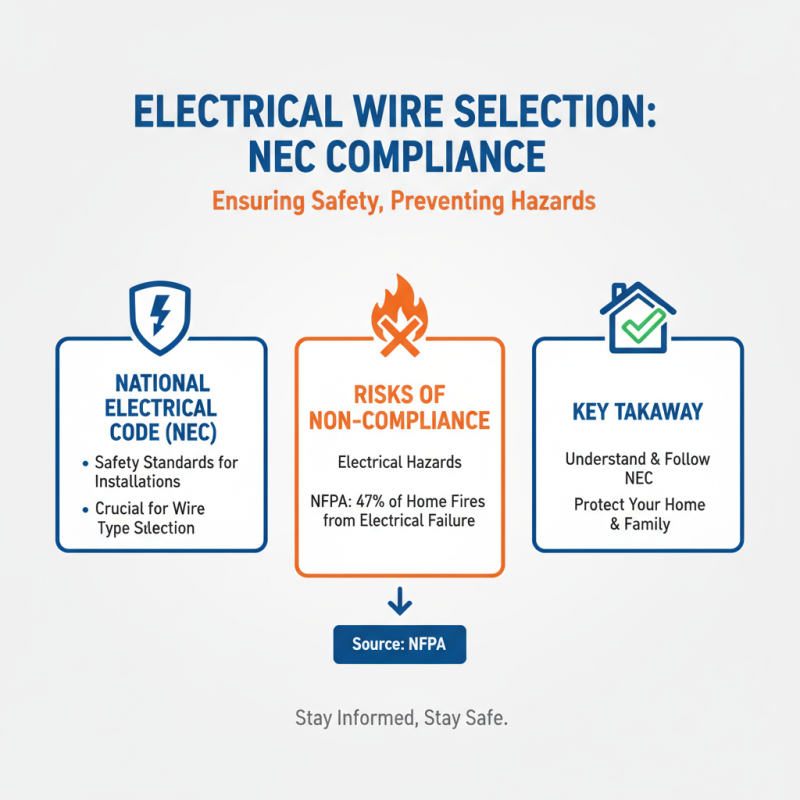
When selecting electric wire types, compliance with the National Electrical Code (NEC) is crucial. The NEC outlines safety standards for electrical installations. According to the National Fire Protection Association (NFPA), non-compliance can lead to electrical hazards. In fact, 47% of home fire incidents are caused by electrical failures or malfunctions. Understanding the NEC is essential for ensuring safety.
Different wire types serve various functions. For example, THHN wire is suitable for dry locations, while NM cable is often used in residential buildings. Each type has specific insulation ratings and conductor sizes that must meet NEC standards. Interestingly, a report from the Electrical Safety Foundation International highlights that many installers overlook these critical details. Ignoring proper assessment can result in costly repairs or dangerous situations.
Proper wire selection is not just about adhering to codes. It requires a deep understanding of the application and environmental conditions. Many electricians face difficulties in using the right materials. They may underestimate the potential issues. Adhering strictly to NEC guidelines can mitigate risks and protect lives. Continuous education is vital for improving compliance awareness in the industry.
Conclusion
This article provides a comprehensive overview of the top 10 electric cable wire types, highlighting their unique characteristics and applications. It delves into the differences between copper and aluminum electric wires, discussing their key specifications and suitability for various projects. The article also categorizes low voltage and high voltage cables, presenting their recommended uses in diverse scenarios, while ensuring compliance with industry standards such as the NEC code for safe wire selection.
Furthermore, the discussion on emerging trends emphasizes innovation in electric cable wire technology and sustainability practices, reflecting the industry’s shift towards more environmentally friendly solutions. This thorough examination allows readers to make informed decisions on the electric cable wire types best suited for their specific needs, whether for residential, commercial, or industrial purposes.