Choosing the right 1 awg copper wire supplier requires more than comparing prices. Global buyers must examine conductor purity, stranding, insulation, temperature ratings, and production consistency. A bright copper surface means little without test reports, batch traceability, and recognized standards behind it.
Thomas Edison, a pioneer of electrical engineering, said, “The value of an idea lies in the using of it.” His words remain relevant here. A technically excellent wire becomes valuable only when it performs reliably inside real equipment, buildings, vehicles, or power systems. For buyers, that means checking voltage-drop data, ampacity tables, flame ratings, and application-specific certifications before placing an order.
The best 1 awg copper wire suppliers usually provide clear drawings, inspection records, sample approvals, and responsive technical support. Look closely at conductor flexibility. A tightly stranded cable can simplify routing through crowded panels. Strong insulation can withstand abrasion during installation. Secure export packaging also matters, especially when coils travel through humid ports or long inland routes.
This guide compares leading suppliers for international purchasing teams. It considers manufacturing experience, quality controls, customization, lead times, and after-sales communication. Some rankings may remain imperfect. Supplier performance can change by region, order size, and production season. That uncertainty deserves attention. A low quote may hide longer testing, higher freight costs, or inconsistent copper content. Careful buyers should verify every important claim before signing.
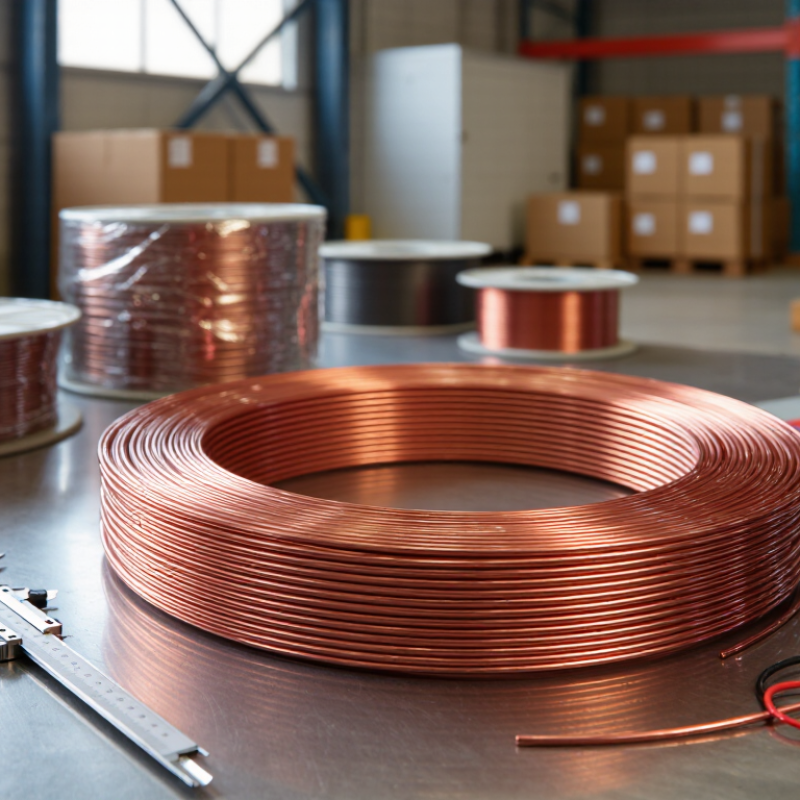
AWG measures conductor size through a reverse numerical scale. A smaller AWG number means a larger copper conductor. For example, 12 AWG copper has an area near 3.31 square millimeters and resistance near 5.21 ohms per kilometer at 20°C. These figures help buyers estimate voltage drop and heating. However, installation length, ambient temperature, bundling, and current load also affect real performance.
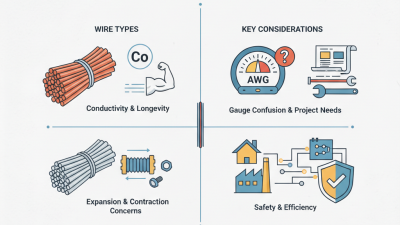
Choose solid or stranded copper according to the application. Solid wire suits fixed routing, while stranded wire handles repeated movement better. Check the insulation material, temperature rating, voltage rating, conductor class, and outer diameter. A reliable technical sheet should state copper purity, resistance, tolerance, test methods, and production batch information. Small details matter.
International buyers also need clear export documentation. Request certificates of conformity, routine test reports, packing details, and traceable lot numbers. Confirm whether dimensions are listed in AWG, square millimeters, or both. Packaging should protect the cable from moisture, crushing, and tangling during long transport. Samples are useful, but one sample cannot prove every production batch. That weakness deserves attention. A written inspection plan, including conductor measurement and insulation testing, reduces avoidable disputes. Check local installation rules before ordering, because accepted standards and labeling requirements can differ between markets.
Top 1 AWG Copper Wire Suppliers for Global Buyers
How to Evaluate Leading AWG Copper Wire Suppliers
Choosing a leading AWG copper wire supplier requires more than comparing prices. I examine conductor size, copper purity, insulation quality, and production consistency. The stated AWG must match measured diameter and resistance results. Small details matter. A reliable supplier should provide recent test reports, material certificates, and clear lot traceability. These records show whether the quoted specification matches the shipped product.
Request samples before approving a large order. Check the wire’s flexibility, surface finish, insulation thickness, and spool labeling. For high-current applications, ask about conductivity testing and temperature ratings. A serious supplier explains its testing equipment and acceptance limits without vague promises. Delivery history also matters. Compare production capacity, minimum order quantities, packaging quality, and responses to technical questions. Slow answers may create larger problems later.
Global buyers should review export documents, labeling practices, and communication procedures. Confirm whether the supplier can maintain the same gauge across repeated batches. One shipment may look perfect while another shows uneven insulation or inconsistent winding. This is where evaluation becomes less comfortable. Price can hide quality risks. I would record every agreed specification in the purchase contract, including tolerances and inspection rights. Even then, my checklist may miss a practical issue, such as storage damage in humid warehouses. A pre-shipment inspection remains useful, especially for costly or time-sensitive orders.
Top AWG Copper Wire Suppliers for Global Buyers
Selecting top AWG copper wire suppliers requires more than comparing prices. Reliable suppliers should provide accurate conductor diameter, copper purity records, insulation data, and batch-level traceability. For example, 12 AWG copper has a nominal conductor diameter of about 2.05 millimeters. Small dimensional errors can increase resistance, heat, and installation difficulty.
Demand is becoming more demanding. The International Energy Agency’s Global Critical Minerals Outlook 2024 projects clean-energy copper demand to rise from about 6.5 million metric tons in 2023 to roughly 10.2 million tons by 2030. The U.S. Geological Survey also estimated global mined copper production at approximately 22 million metric tons in 2023. These figures show why global buyers should examine production capacity, raw-material controls, and delivery resilience, not only catalog size.
During supplier evaluation, request recent test reports covering DC resistance, tensile strength, elongation, and insulation performance. Confirm whether testing follows applicable IEC, ASTM, or national standards. Inspect the reel label carefully. It should show AWG size, length, voltage rating, batch number, and manufacturing date. A low quotation may hide shorter lengths or inconsistent copper quality. I have found that clear documentation often predicts smoother projects than attractive pricing. Still, even strong suppliers need independent sampling, because paperwork can never replace physical inspection.
For global buyers, a 1 AWG copper wire should match recognized standards, not only a supplier’s catalogue description. The nominal conductor area is about 42.4 mm², with a diameter near 7.35 mm. IEC 60228 classifies conductors by metric cross-sectional area and flexibility, while ASTM B3 and ASTM B8 address annealed copper and stranded construction. A reliable supplier should clearly explain these differences.
Certification needs evidence. Ask for current test reports from an ISO/IEC 17025-accredited laboratory, plus traceable batch numbers. Key checks include DC resistance, conductor diameter, tensile strength, elongation, insulation thickness, and spark testing. At 20°C, 1 AWG copper has resistance close to 0.41 ohm per kilometre, depending on construction and temper. The International Copper Study Group reported global refined copper usage above 26 million tonnes in 2023, showing the scale of a market where traceability matters.
Do not accept a certificate alone. Compare the report’s sample length, test temperature, conductor class, and production date. Confirm RoHS and REACH declarations when required by the destination market. In practice, small documentation gaps can delay customs or installation approval. Some suppliers publish impressive numbers but omit resistance tolerance. That deserves scrutiny. A stronger verification process includes random pre-shipment sampling and independent retesting. No system is perfect; even experienced buyers should review assumptions when standards use different measurement systems.
The chart shows rounded nominal DC resistance values for copper conductors at 20 °C. Lower resistance indicates a larger conductor cross-section and lower electrical loss. Global buyers should verify conductor size, material purity, resistance, insulation performance, and traceability against applicable requirements such as ASTM B258, IEC 60228, UL 44, UL 758, and RoHS where relevant.
Top 1 AWG Copper Wire Suppliers for Global Buyers
For global buyers, 1 AWG copper wire pricing depends heavily on the copper index, conductor stranding, insulation, and order volume. S&P Global’s 2024 copper outlook warns of a possible 10-million-metric-ton supply gap by 2035. This risk can influence quotations and delivery schedules. Request a transparent formula showing the copper reference price, processing charge, packaging fee, and shipping terms. A low initial quote may hide expensive testing or documentation costs.
Customization should match the installation, not just the catalog description. Buyers can specify stranded or flexible conductors, insulation temperature ratings, jacket colors, cut lengths, and spool dimensions. Ask for resistance values, conductor diameter, tensile results, and batch traceability. Applicable IEC or ASTM test reports improve reliability. In practice, small details matter. I once underestimated spool size, and the freight class increased unexpectedly. That mistake remains worth considering.
Tips: Compare at least three written quotations. Confirm copper purity, tolerance, minimum order quantity, and production lead time. Check whether prices use FOB, CIF, or DDP terms. Shipping plans should include moisture protection, accurate gross weight, export documents, and customs codes. The U.S. Geological Survey’s Mineral Commodity Summaries identifies copper as a major industrial material, supporting careful long-term sourcing rather than one-time price chasing. A capable supplier should answer technical questions clearly and provide pre-shipment inspection evidence.
| Evaluation Dimension | Typical 1 AWG Copper Wire Benchmark | Buyer Considerations | Recommended Verification |
|---|---|---|---|
| Conductor size | 1 AWG; approximately 42.4 mm² cross-sectional area; nominal diameter about 7.35 mm for a solid conductor. | Confirm whether the quoted size refers to the conductor area, finished cable diameter, or an equivalent metric size. | Request dimensional drawings and a conductor resistance test report. |
| Copper construction | Bare, tinned, annealed, stranded, flexible, or compact-stranded copper are common configurations. | Stranding improves flexibility; tinning can improve corrosion resistance but generally increases material cost. | Check copper purity, temper, stranding class, and applicable conductor standard. |
| Electrical resistance | Approximately 0.124 ohm per 1,000 ft, or about 0.406 ohm per km, at 20°C for a typical copper conductor. | Resistance varies with conductor compactness, temperature, purity, and manufacturing tolerance. | Compare the supplier’s test value with the required national or project standard. |
| Reference ampacity | A commonly referenced 75°C copper ampacity is approximately 130 A, subject to installation conditions and governing code. | Actual allowable current depends on insulation temperature rating, ambient temperature, bundling, conduit, and installation method. | Obtain a project-specific ampacity calculation rather than relying only on a catalog value. |
| Common insulation options | PVC, XLPE, PE, thermoset elastomer, and low-smoke zero-halogen compounds are commonly specified. | Select insulation according to voltage, temperature, flame, oil, sunlight, chemical, and flexibility requirements. | Review insulation thickness, temperature rating, voltage rating, and fire-performance test results. |
| Indicative pricing basis | Finished 1 AWG copper wire is commonly priced using the copper market reference plus fabrication, insulation, packaging, and logistics costs. | A fixed long-term price is difficult because copper prices and exchange rates fluctuate. Quotations should identify the price date and adjustment formula. | Request a transparent breakdown of copper content, conversion charge, insulation, packing, freight, duties, and taxes. |
| Minimum order quantity | Common production minimums range from approximately 500–2,000 m for standard constructions; custom compounds or colors may require more. | Small orders may carry setup, slitting, testing, or partial-reel charges. | Confirm minimum order by specification, reel length, color, insulation, and delivery destination. |
| Customization scope | Possible options include conductor stranding, insulation material, jacket color, printing, shielding, cut lengths, reel type, and private labeling. | Custom specifications can affect tooling, lead time, MOQ, compliance testing, and cost. | Use a signed technical specification sheet and an approved first-article sample. |
| Typical production lead time | Approximately 2–6 weeks after drawing approval and deposit for standard products; custom products may require additional time. | Copper availability, production scheduling, testing, and export documentation can affect the final schedule. | Request a milestone schedule covering raw-material booking, production, inspection, and dispatch. |
| Shipping formats | Heavy-gauge wire is commonly shipped on wooden, steel, or plywood reels; reel dimensions and gross weight vary by length. | Reel size can determine container utilization, handling equipment, storage requirements, and freight cost. | Request reel drawings, net/gross weight, cubic volume, and maximum stack height. |
| Transport selection | Sea freight is generally suitable for large or non-urgent orders; air freight is faster but usually uneconomical for heavy copper products. | Compare total landed cost, transit time, port handling, inland delivery, insurance, and customs clearance. | Compare quotations under the same Incoterm, shipment weight, destination, and insurance coverage. |
| Compliance and testing | Typical documentation may include dimensional inspection, conductor resistance, voltage, insulation, spark, tensile, elongation, and flame tests where applicable. | Required tests depend on destination market, application, voltage class, and project specifications. | Verify independent laboratory capability, traceable test records, and conformity with the requested standard. |
| Quality-system assessment | A documented quality system, incoming-material controls, in-process checks, final inspection, and batch traceability are key indicators. | Certificates alone do not replace product sampling, factory audits, or shipment-level inspection. | Review audit reports, calibration records, corrective-action procedures, and sample retention practices. |
| Supplier selection scorecard | A practical comparison can weight technical conformity, total landed cost, capacity, lead time, quality evidence, communication, warranty, and after-sales support. | The lowest unit price may not provide the lowest total cost if quality failures, delays, or unsuitable packaging occur. | Use the same specification, sample process, inspection plan, payment terms, and delivery conditions for every quotation. |
Note: Technical values and commercial ranges are general industry reference points. Final performance, pricing, delivery time, and compliance must be confirmed against the supplier’s current quotation, test reports, applicable standards, and destination-country requirements.