Choosing a wiring loom manufacturer is not a simple price comparison. It is a decision about continuity, safety, documentation, and production confidence.
As wiring-harness engineer Dr. Thomas M. Korb explains, “A dependable harness starts with controlled routing, accurate terminals, and repeatable inspection.” That principle remains practical. A polished sample can still hide weak crimp control, unstable materials, or poor change management. Buyers should look beyond factory photographs. Ask for terminal-pull test records, continuity reports, material traceability, and evidence of process certification. Small details matter.
This guide presents ten wiring loom manufacturers serving global buyers across automotive, industrial, agricultural, medical, and energy applications. Each company is considered through practical purchasing criteria. These include engineering support, prototype speed, production capacity, quality systems, geographic reach, and communication discipline. Compliance claims should be verified independently. Do not rely on brochures alone.
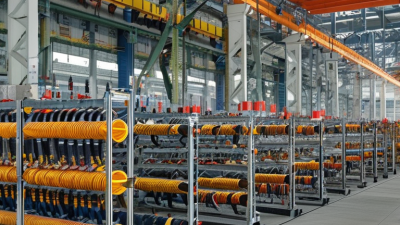
Look closely at the factory floor. Are wires labeled clearly? Are operators using calibrated tools? Can the supplier explain how it handles engineering revisions? Can it protect delivery schedules during material shortages? These questions often reveal more than a low quotation.
No ranking is perfect. Supplier fit depends on voltage, environment, annual volume, and required customization. A manufacturer excellent for vehicle interiors may not suit a harsh industrial cabinet. That limitation deserves attention.
The following selection is designed to help global buyers compare strengths, question assumptions, and build a more reliable shortlist before requesting samples or contracts.
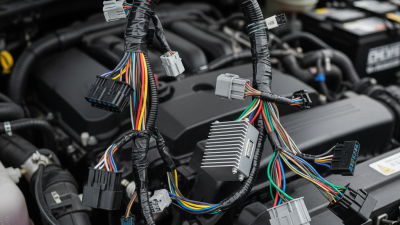
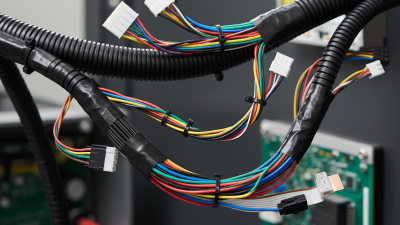
A wiring loom is an organized group of wires, terminals, connectors, and protective coverings. It carries electrical power and signals between components in a machine or vehicle. Instead of handling loose cables, engineers use one shaped assembly with defined routes and connection points. A loom can sit behind a dashboard, inside industrial equipment, or along a production line.
Its importance becomes clear during installation and service. Correct routing reduces tangling, abrasion, heat exposure, and accidental disconnection. Secure clips keep wires away from moving parts. Sealed connectors help resist moisture, dust, and vibration. In a working vehicle, one poorly crimped terminal may cause intermittent lighting, sensor errors, or unexpected downtime. Small details matter.
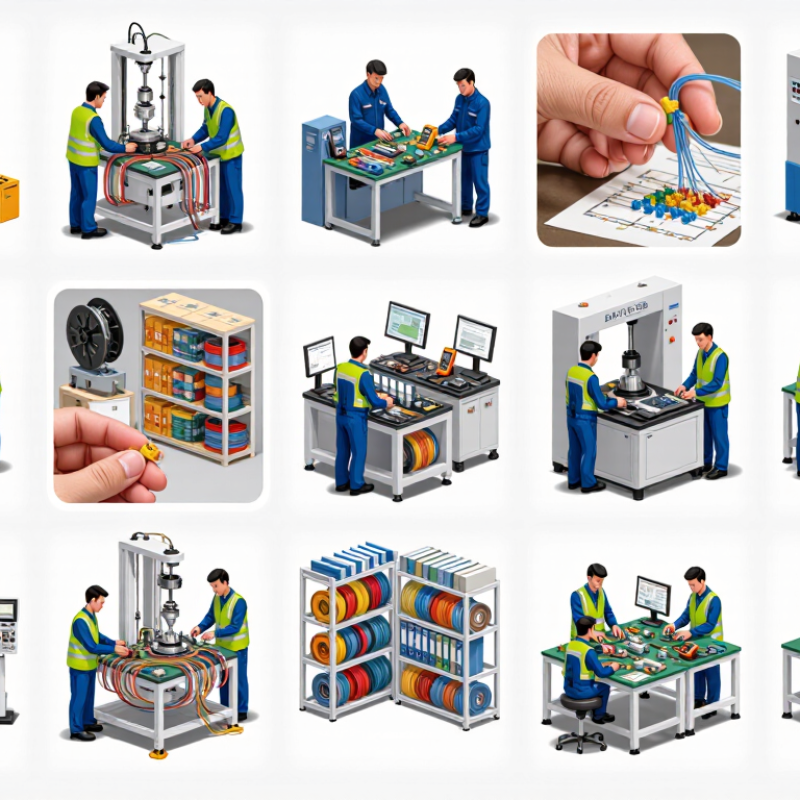
Experienced manufacturers usually confirm wire gauges, circuit loads, connector positions, bend radii, and insulation requirements before production. They may use continuity checks, pull tests, visual inspections, and sample electrical tests. Documentation should identify each circuit clearly, with revision control for international buyers. This supports traceability and more consistent quality across batches. Still, a polished drawing does not guarantee a perfect loom. Misread labels, rushed changes, or unsuitable clips can survive inspection. That weakness deserves honest review. Buyers should request samples, testing records, material specifications, and clear communication about tolerances before approving large quantities. A loom is not merely bundled cable; it is a fitted electrical pathway that must perform reliably in its actual environment.
| No. | Manufacturer Evaluation Dimension | Relevant Technical Requirement or Benchmark | Why It Matters to Global Buyers | Recommended Verification Evidence |
|---|---|---|---|---|
| 1 | Electrical Design Capability | Correct conductor sizing, circuit separation, current capacity, voltage-drop control, and protection against short circuits and overloads. | Ensures reliable power and signal transmission while reducing overheating, malfunction, and fire risk. | Review electrical drawings, load calculations, circuit schedules, and design-change procedures. |
| 2 | Wire and Cable Selection | Conductor materials commonly include copper or aluminum; insulation must match voltage, temperature, chemical, and flexibility requirements. | The correct cable construction improves service life and prevents insulation breakdown in demanding environments. | Check cable specifications, temperature ratings, voltage ratings, material declarations, and incoming inspection records. |
| 3 | Connector and Terminal Quality | Secure crimping, correct contact geometry, suitable sealing, and compatibility between terminals, housings, and conductors. | Poor connections can cause increased resistance, intermittent faults, vibration failures, and localized heating. | Request crimp-force studies, pull-force results, terminal cross-section samples, and connector compatibility records. |
| 4 | Protection and Routing | Use of conduit, braided sleeving, spiral wrap, grommets, clips, shielding, and strain relief according to the installation environment. | Proper protection limits abrasion, moisture ingress, electromagnetic interference, heat damage, and mechanical stress. | Evaluate routing drawings, bend-radius controls, shielding design, ingress protection requirements, and environmental test results. |
| 5 | Manufacturing and Crimping Process Control | Controlled stripping, terminal application, splicing, sealing, labeling, and assembly using documented work instructions. | Repeatable processes reduce dimensional variation, open circuits, reversed connections, and assembly defects. | Check process flow charts, tooling calibration records, operator training, first-article approval, and traceability procedures. |
| 6 | Testing and Inspection | Continuity, resistance, insulation, hipot where applicable, polarity, pin-position, dimensional, and visual inspections. | Electrical testing identifies assembly errors before installation and supports consistent product quality. | Request test specifications, equipment calibration certificates, inspection plans, and sample test reports. |
| 7 | Environmental Durability | Validation may include thermal cycling, vibration, flexing, moisture exposure, salt spray, chemical resistance, and insertion or retention testing. | A durable loom maintains electrical performance under temperature changes, movement, vibration, and exposure to fluids. | Review validation plans, laboratory reports, material compatibility data, and product-specific life-cycle testing. |
| 8 | Compliance and Material Control | Documented control of restricted substances, flammability requirements, material composition, and applicable product regulations. | Compliance documentation helps prevent customs delays, product recalls, and nonconformity in different markets. | Ask for declarations of conformity, material declarations, safety-data information, and regulatory compliance records. |
| 9 | Customization and Engineering Support | Capability to support custom lengths, branch structures, connector combinations, labels, protective materials, and engineering revisions. | Application-specific customization improves installation efficiency and reduces field modifications. | Evaluate sample-development procedures, drawing review, prototype lead time, engineering-change control, and documentation quality. |
| 10 | Production Capacity and Supply Reliability | Scalable assembly capacity, controlled component sourcing, batch traceability, packaging standards, and documented delivery performance. | Stable supply reduces line stoppages, inventory risk, and the impact of component shortages or demand changes. | Review capacity plans, supplier-control procedures, business-continuity plans, packaging specifications, and historical delivery records. |