Choosing a China-based supplier for wire zip ties is not just a price comparison. Buyers need products that fit their application, arrive consistently, and come with clear specifications. A tie that slips around a cable bundle or snaps during installation can delay an entire assembly line. Small details matter: wire diameter, coating, loop size, closure strength, and packaging quality.
Quality-management expert W. Edwards Deming wrote, “Quality comes not from inspection, but from improvement of the production process.” That principle is useful when comparing suppliers. Ask how production is controlled, what testing records are available, and whether samples match the final order. Check material details, corrosion resistance, traceability, lead times, and communication practices. A polished catalogue is not proof of consistent output. Ask for evidence.
This guide examines what global buyers should assess when shortlisting China’s wire zip ties suppliers. It considers product range, customization, quality checks, export experience, and after-sales support. It also explains how to compare quotations without overlooking specifications or total delivery costs. A low price can still be costly. And supplier rankings can change as capabilities, materials, and order requirements differ. No single factory fits every buyer. One detail is easy to miss: confirm that the sample and production order use the same specification. A careful review takes time, but it can prevent avoidable surprises.
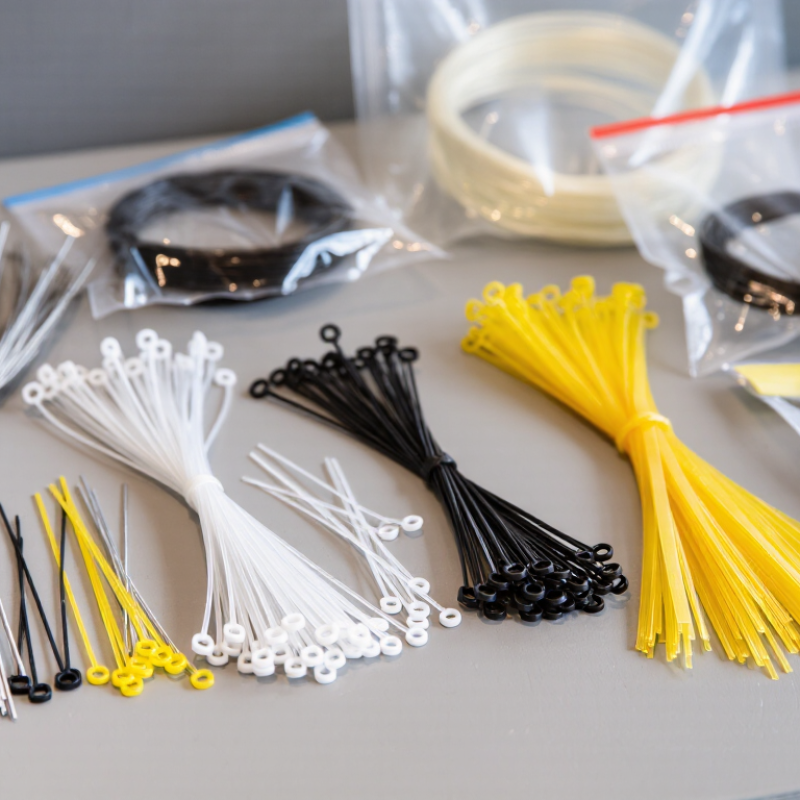
Wire zip ties are flexible fasteners used to gather, route, or temporarily secure wires and light cables. The term can describe ties with a bendable metal core, often coated in plastic, as well as metal cable ties with a locking head. Check the construction before use; these products are not interchangeable. A coated, twistable tie suits a desk lamp cord or garden hose, while a locking metal tie is made for a firmer hold. Neither should replace a proper support for heavy loads.
Good installation is simple but deliberate. Gather cables without crushing them, leave slack near plugs and moving parts, then tighten the tie only enough to prevent tangling. Sharp edges can damage insulation, and tight bends may stress a cable over time. The International Energy Agency’s 2023 report, Electricity Grids and Secure Energy Transitions, says the world must add or replace 80 million kilometres of grids by 2040. That is useful infrastructure context, not a measure of wire-tie demand. Small components still need careful selection.
Tips: Match material to the setting. Use a smooth-coated tie where it may touch a cable jacket, and inspect bundles after installation. One limitation is easy to miss: a reusable tie can still wear out. Replace it if the wire core is exposed or the coating cracks.
| Product Type | Construction and Materials | Common Applications | Selection Considerations | Supplier Checks for Global Buyers |
|---|---|---|---|---|
| Standard nylon cable ties | A one-piece plastic strap with a head and locking mechanism. Nylon 6/6 is commonly used; UV-stabilized grades are available for some outdoor applications. | Bundling electrical cables, organizing data wiring, and securing light components in general indoor installations. | Choose the length and width for the bundle, and check the specified tensile strength, operating temperature range, and environmental suitability. A standard nylon tie is not automatically suitable for prolonged outdoor exposure. | Request material and dimensional specifications, tensile-test information, packaging details, and samples. Confirm that the stated grade and any UV-resistance claims match the product documentation. |
| Stainless steel cable ties | A metal strap, commonly made from stainless steel, secured by a locking mechanism. Some versions have a protective coating; others are uncoated. | Industrial, outdoor, or high-temperature cable bundling where a plastic tie may not meet the environmental or mechanical requirements. | Check the stainless-steel grade, strap dimensions, locking design, and temperature and corrosion requirements. Coating can help protect cable jackets, but compatibility should be assessed for the installation. | Ask for the exact material grade, test methods, dimensional tolerances, and corrosion-related documentation relevant to the intended environment. Verify product samples and packaging labels. |
| Coated stainless steel cable ties | A stainless-steel strap covered with a polymer coating. The coating can provide a barrier between the metal strap and the bundle. | Bundling cables or pipes where reducing direct contact with the metal strap is important, including some outdoor and industrial installations. | Confirm coating material, thickness, temperature limits, and resistance to the chemicals or weather conditions expected at the installation site. Do not assume every coating has the same properties. | Request coating specifications and samples, and check for consistent coverage, finish, and locking performance. Confirm that test reports apply to the coated product being quoted. |
| Metal-detectable plastic cable ties | A plastic cable tie formulated with detectable metal particles. Detectability depends on the product, detector, and inspection setup. | Some food-processing and pharmaceutical production areas where foreign-material control procedures call for detectable plastic components. | Detection performance is application-specific. Validate the tie with the facility’s own metal-detection equipment and follow site hygiene and safety requirements. | Request detection-performance information and samples for production-line testing. Verify material, dimensions, and any applicable food-contact or regulatory documentation for the intended market. |
| Reusable cable ties | Plastic ties designed with a releasable or reusable locking feature. They are distinct from permanent one-way locking ties. | Temporary cable organization, maintenance work, and installations where bundles may need to be adjusted or opened. | Check the release mechanism, reuse guidance, strap dimensions, and load requirements. Reusability does not mean the tie can be reused indefinitely or for safety-critical restraint. | Ask for operating instructions, sample units, and product specifications. Test the release mechanism and locking function under the conditions expected in use. |
| Understanding “wire zip ties” | The term can refer to stainless-steel cable ties or, in some contexts, plastic ties that incorporate a wire element. Product construction should be confirmed before ordering. | Use depends on the actual construction: metal ties are chosen for particular demanding environments, while plastic ties are widely used for general cable management. | Specify the material, locking style, dimensions, environment, and application rather than relying on the phrase “wire zip tie” alone. | Ask the supplier for a drawing, material declaration, technical data sheet, and a physical sample. Confirm that the quotation, sample, and production specification describe the same product. |