China Best Wiring Loom Manufacturer for Global Buyers?

Choosing the China best wiring loom manufacturer requires more than comparing unit prices. Global buyers need evidence of engineering control, stable production, and dependable communication. A wiring loom connects power, signals, sensors, and safety systems. One misplaced terminal can stop an entire assembly line.

Market demand is also changing quickly. The International Energy Agency’s Global EV Outlook 2025 reported more than 17 million electric cars sold worldwide in 2024. Electric vehicles require complex high-voltage and low-voltage harness systems. They also demand stronger testing, insulation control, and traceability. OICA recorded global motor vehicle production at approximately 75 million units in 2024. These figures show why manufacturers must support both volume and technical variation. They do not prove that every Chinese supplier is suitable.

Look deeper.

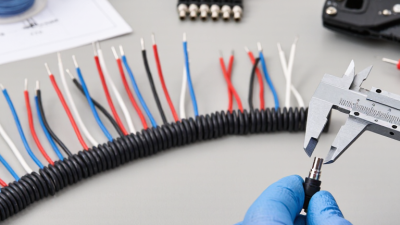
A capable China wiring loom manufacturer should demonstrate experience with crimp-force monitoring, continuity testing, pull-force verification, and sample approval. ISO 9001 certification can support process consistency, but certification alone is not enough. Buyers should review PPAP records, change-control procedures, material certificates, and actual inspection data. IATF 16949 is especially relevant for automotive programs, where defect prevention matters more than attractive brochures. RoHS and REACH documentation may also be necessary for international shipments.

However, supplier selection is never perfectly objective. Public market reports often combine different harness categories, so their forecasts may not match one factory’s results. A realistic audit should include factory visits, pilot orders, packaging checks, and production-line photographs. The best partner is not automatically the cheapest. It is the manufacturer that can explain failures clearly, correct them quickly, and repeat quality under pressure.
China Best Wiring Loom Manufacturer for Global Buyers?

What Makes a Wiring Loom Manufacturer the Best Choice in China

China Best Wiring Loom Manufacturer for Global Buyers?

What Makes a Wiring Loom Manufacturer the Best Choice in China

The best wiring loom manufacturer combines verified engineering with disciplined production. Grand View Research valued the global automotive wiring harness market at approximately USD 52.61 billion in 2023. This growth increases pressure on suppliers to deliver stable quality, not only lower prices.

A capable manufacturer should provide complete drawings, circuit validation, material certificates, and controlled sample approval. Its engineers must understand wire gauge, terminal retention, insulation thickness, bend radius, and connector sealing. Production should follow IPC/WHMA-A-620 guidance, with crimp-force checks and continuity testing recorded by batch. Traceability matters. Each loom should link to its operator, tooling, materials, and inspection results.

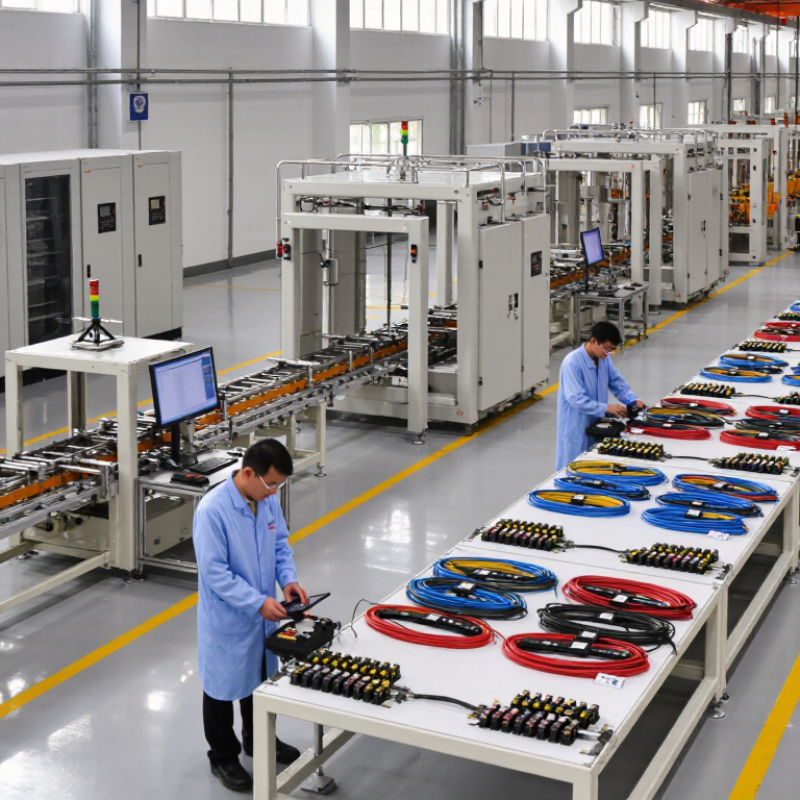
Factory experience also appears in small details. Wires should be cut without damaged insulation. Branch points need consistent spacing. Protective sleeving must remain secure near sharp bends and heat sources. A reliable supplier uses first-article inspection, process audits, and corrective-action records. It should also support design changes without losing revision control.

No factory is perfect. Even a qualified manufacturer may miss a labeling error or delay a test report. That weakness becomes manageable when communication is direct and evidence is visible. Global buyers should request capability samples, audit production records, and confirm realistic lead times before placing volume orders. The strongest Chinese partner is not simply the cheapest option. It is the supplier whose process remains dependable when specifications become difficult.
How to Evaluate Wiring Loom Design and Production Capabilities

China Best Wiring Loom Manufacturer for Global Buyers?

How to Evaluate Wiring Loom Design and Production Capabilities

Selecting a wiring loom manufacturer requires more than comparing prices. Review its design process, technical records, and production discipline. An experienced supplier should interpret drawings, connector specifications, wire gauges, and routing limits accurately. Ask for a clear pin map and a controlled bill of materials.

Inspect prototype details closely. Check terminal crimp height, insulation support, locking features, bend radius, and branch lengths. A reliable factory should perform continuity, insulation resistance, and high-voltage tests when required. Crimp samples deserve special attention. Pull-force results and cross-section images can reveal hidden defects.

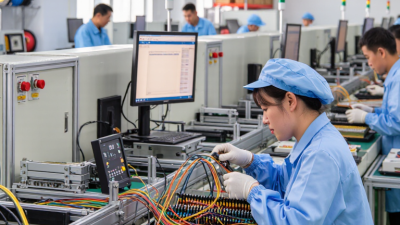
Ask how production changes are approved and recorded. Effective factories use calibrated tools, visual work instructions, and traceable inspection records. Visit the cutting, stripping, crimping, assembly, and testing areas if possible. Clean workstations matter. So does operator training.

A polished sample can mislead. I have seen attractive looms fail because one terminal was poorly locked. Capacity claims also need evidence. Compare equipment lists, staffing, test coverage, and recent delivery records. Small pilot orders can expose weak process control before larger commitments. Do not ignore packaging. Correct bend protection and connector caps prevent damage during transport.

Perfect evaluation is difficult. Leave room for questions.

China Best Wiring Loom Manufacturer for Global Buyers? - How to Evaluate Wiring Loom Design and Production Capabilities
Evaluation Dimension Weight What to Evaluate Practical Benchmark or Requirement Recommended Evidence from the Supplier
Engineering Documentation 10% Ability to convert customer requirements into controlled wiring-loom drawings, schematics, bills of materials, and assembly instructions. Drawings should identify wire type, conductor size, color, circuit number, connector cavity, terminal, seal, branch location, tolerances, and revision level. Sample redacted drawing, controlled bill of materials, revision-history record, engineering-change procedure, and approval workflow.
Electrical Design and Circuit Integrity 12% Correct circuit routing, polarity, continuity, shielding, grounding, and protection against short circuits or open circuits. Every production loom should receive documented 100% electrical testing appropriate to the design, including continuity and short-circuit checks. Electrical-test specification, tester capability list, test-program control process, sample test report, and nonconformance records.
Wire and Cable Selection 8% Selection of conductor cross-section, insulation, temperature rating, flexibility, current capacity, voltage rating, and environmental suitability. The selected wire must match the required current, temperature, voltage, bend radius, abrasion exposure, and installation environment; derating should be considered where applicable. Wire specifications, material certificates, approved-vendor list, design calculations, and incoming-inspection records.
Terminal and Connector Quality 12% Correct terminal, connector, seal, cavity position, plating, crimp geometry, insertion force, and retention performance. Crimp tooling should be matched to the terminal and wire combination. Crimp height, pull force, conductor brush, insulation support, and terminal position should be verified against applicable specifications. Crimp-height records, pull-test results, tooling-maintenance logs, terminal-section samples, connector-part controls, and cavity-error prevention methods.
Applicable Standards and Compliance 8% Use of recognized requirements for cable assemblies, crimping, electrical safety, traceability, and customer-specific compliance. The supplier should identify the applicable requirements, such as IPC/WHMA-A-620 for cable and wire-harness workmanship, ISO 6722 where road-vehicle cables apply, or other customer-specified standards. Standards matrix, internal workmanship criteria, operator training records, compliance declarations, and audit reports.
Mechanical Construction 10% Branch geometry, breakout positioning, tape or braid application, conduit selection, bend radius, strain relief, clipping, and protection from vibration or abrasion. The finished loom should maintain specified dimensions and branch locations without excessive tension, exposed conductor, loose wrapping, sharp edges, or unsupported connector weight. Dimensional inspection report, assembly board or fixture photographs, sample approval record, fixture-maintenance log, and mechanical test results.
Manufacturing Process Control 12% Stability and repeatability of cutting, stripping, crimping, sealing, splicing, labeling, routing, taping, and final assembly operations. Critical operations should have standardized work instructions, controlled parameters, trained operators, defined inspection points, and documented reaction plans. Process-flow diagram, control plan, work instructions, first-piece approval, line-clearance checklist, and process-capability data for critical operations.
Testing and Validation 10% Coverage of electrical, mechanical, environmental, and application-specific validation before mass production. Validation may include continuity, insulation resistance, dielectric withstand where applicable, terminal retention, vibration, temperature cycling, fluid exposure, and dimensional checks based on the end use. Validation plan, laboratory capability list, test reports, sample identification, acceptance criteria, and corrective-action records.
Traceability and Change Management 8% Ability to trace materials, operators, tooling, test results, production lots, and engineering changes. Each production lot should be traceable to approved materials, current drawings, test results, inspection records, and relevant process or material changes. Lot-code structure, barcode or traveler examples, material-lot records, change-notice procedure, and sample traceability exercise.
Quality Performance 8% Historical ability to control defects, respond to customer complaints, and prevent recurrence. Review defect trends using measurable indicators such as first-pass yield, customer-return rate, defect parts per million, corrective-action closure time, and repeat-defect frequency. Anonymized quality dashboard, corrective-action reports, inspection records, internal-audit findings, and examples of verified corrective actions.
Capacity and Delivery Capability 7% Available labor, equipment, fixture capacity, production flexibility, lead-time control, and ability to support demand changes. Capacity should be demonstrated using realistic cycle times, staffing plans, equipment availability, bottleneck analysis, and capacity calculations for the requested product mix. Capacity plan, production schedule, equipment list, staffing matrix, lead-time data, contingency plan, and sample ramp-up schedule.
Packaging and International Logistics 5% Protection of connectors, terminals, labels, branch geometry, and moisture-sensitive components during storage and transport. Packaging should prevent crushing, tangling, contamination, electrostatic damage where relevant, moisture exposure, and deformation of critical branches or terminals. Packaging specification, approved packing sample, shipping test results where required, labeling format, and export documentation process.
Suggested use: score each dimension from 1 to 5, multiply the score by the listed weight, and request objective evidence before approving a wiring-loom supplier. Requirements must be adjusted to the product’s voltage, current, temperature, environmental exposure, industry, and customer specifications.

Which Quality Standards Should Global Buyers Require

China Best Wiring Loom Manufacturer for Global Buyers?

Global buyers should require measurable quality standards, not attractive samples alone. Vehicle production reached about 93.5 million units in 2023 , according to OICA data. That scale makes wiring reliability a safety and cost issue.

Require ISO 9001 certification, documented process controls, and clear corrective-action records. For automotive programs, IATF 16949 alignment is also important. It supports risk-based manufacturing and traceability.

IPC/WHMA-A-620 provides practical requirements for crimping, terminals, soldering, and cable assemblies. Ask for the applicable revision and inspection criteria.

Electrical testing must match the finished harness. Request 100% continuity, short-circuit, resistance, and high-voltage tests where applicable. For vehicle cables, verify compliance with ISO 6722 or the customer’s required cable specification.

A supplier should provide crimp-force monitoring, pull-force results, material certificates, and batch-level records. The ISO Survey 2023 reported more than 1.2 million ISO 9001 certificates worldwide. Certification shows a management system, though it does not prove every harness is defect-free. This distinction is easy to miss.

Tips:

Inspect sample crimps under magnification. Check terminal locking with a gauge. Request three months of traceability records. Audit actual production lines, not only offices. Ask how defects are contained. Perfect paperwork can still hide weak operator training. I have seen small labeling errors create costly rework, so packaging checks deserve equal attention. Review standards annually, because customer specifications and regulations may change.

How China Wiring Loom Suppliers Manage Customization and Testing

China Best Wiring Loom Manufacturer for Global Buyers?

China wiring loom suppliers increasingly support highly customized programs, from automotive control units to industrial equipment. Grand View Research valued the global automotive wiring harness market at approximately USD 48.8 billion in 2023. It also projects steady growth through 2030. This demand encourages Chinese factories to offer shorter development cycles, flexible tooling, and low-volume prototypes.

Customization usually begins with drawings, connector lists, cable specifications, and installation limits. Engineers review bend radius, current capacity, insulation temperature, and routing space. They may produce a sample board before cutting production tools. Small details matter. A 2-millimeter length error can create assembly stress inside a crowded enclosure. Suppliers often use crimp-force monitoring, pull testing, continuity testing, and high-voltage insulation testing. These procedures can follow IPC/WHMA-A-620 workmanship requirements, where applicable.

Testing should match the buyer’s real operating conditions. Heat cycling, vibration, moisture exposure, and repeated flexing may reveal weaknesses that a simple continuity check misses. The IEA reported global electric car sales above 14 million in 2023, increasing pressure on harness suppliers to control heat, vibration, and high-current risks. Traceable batch records help connect each terminal, operator, and test result. Yet customization is not automatically reliable. Some suppliers still depend too heavily on visual inspection. That is a weakness worth challenging. Buyers should request first-article reports, material certificates, test limits, and corrective-action records before approving mass production.

China Wiring Loom Suppliers: Customization and Testing Workflow

Typical reference values used in low-voltage wiring loom production. Final requirements vary by application, drawing, connector system, and customer specification.

Custom wiring loom suppliers commonly combine drawing review, sample approval, 100% visual inspection, continuity testing, insulation-resistance testing, and dielectric withstand testing. The reference values shown reflect commonly used production checkpoints rather than any individual company or brand.

What to Check Before Selecting a Long-Term Manufacturing Partner

Choosing the China best wiring loom manufacturer requires more than comparing unit prices. Grand View Research estimates the global automotive wiring harness market reached about USD 51 billion in 2023. Growth increases pressure on capacity, consistency, and delivery control.

Ask for recent process evidence, not polished promises. Review crimp-force records, terminal pull-test results, conductor cross-sections, and first-article inspection files. A reliable factory should identify each lot by operator, machine, material batch, and inspection date. IPC standards provide useful guidance for workmanship and cable assembly acceptance, but your drawings still define the final requirements.

Check whether the supplier can manage engineering changes without confusion. Request a sample change notice, updated drawing, and approval trail. Visit the production floor if possible. Look for labeled bins, protected terminals, controlled cutting lengths, and visible rework areas. Ask how many backup machines support your forecast. A low quoted price may hide manual work or weak maintenance. That risk is easy to underestimate.

The 2024 Deloitte Global Automotive Supplier Study highlights continuing cost and supply-chain pressure across automotive manufacturing. Therefore, assess financial resilience, raw-material purchasing, and realistic lead times. Require a pilot order before signing a long-term agreement. Measure defect rates, delivery accuracy, communication speed, and corrective-action quality. My own caution is simple: a clean audit can still miss ordinary problems. Inspect during a busy production week, not only during a prepared visit.