China Top 10 Alarm Cable Manufacturers for Global Buyers

Global demand for reliable alarm cable is expanding with fire detection, security, and smart-building construction. Fortune Business Insights estimates that the global fire alarm systems market reached about USD 30 billion in 2023. It projects continued growth through 2032. However, market estimates differ because researchers define systems, components, and installation services differently. That distinction matters.

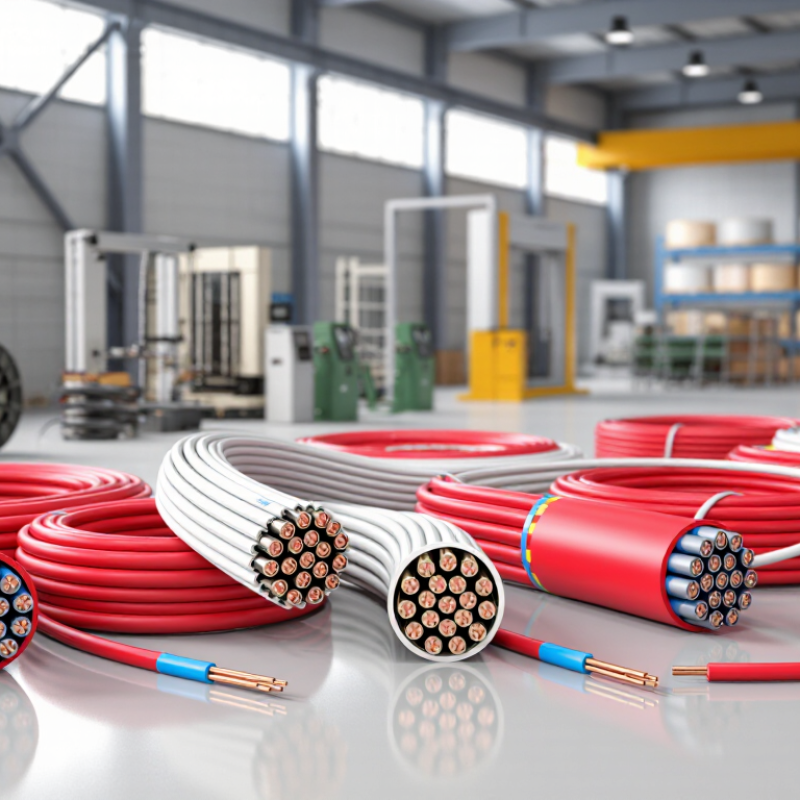
For buyers, cable selection is not a simple price comparison. Conductor material, insulation, shielding, fire resistance, signal integrity, and certification can change project performance. A cable may look suitable on a bright warehouse floor. Its real test begins inside crowded conduits, humid plant rooms, or long commercial corridors. Robert Solomon, a former NFPA fire protection director, states, “The purpose of a fire alarm system is to provide notification of a fire emergency.” That purpose places alarm cable at the center of dependable life-safety communication.

This guide examines China’s top 10 alarm cable manufacturers for global buyers. It considers manufacturing experience, testing capability, export service, product range, and documented compliance. References include NFPA 72 guidance, UL cable requirements, and international market research from Fortune Business Insights and MarketsandMarkets. Certifications alone are not enough. Factory consistency, traceability, and installation support also deserve attention.

A ranking is never perfect.

Some suppliers publish limited technical data. Others show impressive catalogs but weak project evidence. Buyers should verify current certificates, test reports, conductor specifications, and delivery records before contracting. The following manufacturers offer useful starting points, not unquestionable conclusions.
China Top 10 Alarm Cable Manufacturers for Global Buyers

Alarm Cable Basics: 24–18 AWG Conductors and 300 V Rated Designs

For global buyers, alarm cable selection starts with conductor geometry, not catalogue claims. The common 24–18 AWG range creates distinct electrical trade-offs. At 20°C, ASTM B258 lists approximate resistance near 25.7 ohms per 1,000 feet for 24 AWG and 6.4 ohms for 18 AWG. Longer runs expose this difference. A 24 AWG pair uses less copper and bends easily, but higher resistance increases voltage drop. An 18 AWG pair usually supports longer routes with better margin, subject to loop resistance, alarm load, and installation temperature. That is where specifications get messy.

A 300 V rating describes insulation withstand, not permissible current or circuit performance. Buyers should verify conductor material, insulation thickness, capacitance, shielding, drain-wire treatment, and jacket classification. For fire-alarm applications, cable types and installation spaces must match applicable requirements under NFPA 70 and NFPA 72. NFPA’s Fire Loss in the United States During 2023 recorded approximately 1.50 million fires. That figure makes documentation more than paperwork. Test reports should identify resistance, dielectric testing, flame behavior, temperature range, and production traceability. UL 1424 alignment can help, but a certificate alone does not prove suitability for every route. The uncomfortable point: thinner cable may pass a basic check yet fail the project’s voltage-drop calculation. Recheck the full circuit.
China’s Alarm Cable Standards: IEC 60332, RoHS, and CPR Compliance

When global buyers compare China’s top ten alarm cable manufacturers, standards should guide the shortlist, not catalog claims. For alarm and security installations, IEC 60332 testing indicates resistance to vertical flame propagation under defined conditions. It does not automatically prove low smoke, low toxicity, or fire survival performance. Those are different requirements. Ask for the exact test method, cable construction, rated voltage, and report number.

RoHS controls restricted substances in electrical products and supports safer material selection. Buyers should request a current declaration, material records, and evidence covering insulation, sheath, and additives. Do not rely on a generic factory statement. CPR needs careful interpretation. In the European Union, permanently installed construction cables may require classification under EN 50575 and the applicable CPR system. Check the declared reaction-to-fire class, assessment route, Declaration of Performance, and CE documentation. CPR is not a universal export certificate.

During supplier audits, compare printed markings with samples, packing labels, and laboratory documents. Confirm conductor diameter, resistance, insulation thickness, and batch traceability before approving volume production. Small mismatches can create expensive site problems. Inspect flame-test scope carefully; one accepted result may not represent every cable variant. That caution is easy to overlook. Reliable manufacturers explain limits clearly, keep records accessible, and accept independent pre-shipment inspection.

China Top 10 Alarm Cable Manufacturers for Global Buyers - China’s Alarm Cable Standards: IEC 60332, RoHS, and CPR Compliance

A manufacturer-neutral purchasing and compliance reference for evaluating alarm cable suppliers in China

No. Evaluation Dimension Relevant Technical Benchmark
1 Conductor Material and Size Alarm cables commonly use annealed copper conductors. Typical conductor areas include 0.22 mm², 0.50 mm², 0.75 mm², 1.00 mm², and 1.50 mm², depending on current, voltage drop, and installation distance. Conductor resistance test report, dimensional inspection record, material declaration, and approved technical data sheet. Helps confirm signal integrity, voltage-drop performance, and compatibility with the intended alarm system.
2 Cable Construction Common constructions include paired, multi-core, shielded, and individually screened designs. Drain wires and overall shields may be specified for electromagnetic-noise control. Cross-sectional drawing, core identification specification, shielding coverage data, and sample inspection approval. Supports correct installation and reduces the risk of interference in fire, security, access-control, and monitoring circuits.
3 Insulation and Sheath Materials PVC, LSZH, and other halogen-free compounds may be selected according to smoke, flame, toxicity, flexibility, temperature, and installation requirements. The material choice must match the project specification. Compound technical data, halogen and smoke test results where applicable, operating-temperature range, and material traceability records. Allows the buyer to balance cost, fire performance, indoor air quality, flexibility, and environmental requirements.
4 IEC 60332-1-2 Flame Performance IEC 60332-1-2 This test addresses vertical flame propagation for a single insulated wire or cable using a defined flame application procedure. Test report identifying the exact cable construction, conductor size, insulation or sheath material, test method, and laboratory details. Provides a basic single-cable flame-propagation reference for projects that specify IEC 60332 performance.
5 IEC 60332-3 Bundle Flame Performance IEC 60332-3 Bundle flame-propagation tests are used when cables are installed together in groups. The applicable category and test setup must be stated by the project or purchaser. Complete test report showing the applicable IEC 60332-3 category, cable loading, arrangement, duration, and result. Helps evaluate fire propagation risk in cable trays, risers, shafts, and other installations with multiple cables.
6 EU RoHS Compliance RoHS 2011/65/EU EU 2015/863 Compliance requires control of restricted substances in applicable electrical and electronic products, including the ten restricted substances listed under the current RoHS framework. RoHS declaration, material declaration, supplier-control procedure, and laboratory screening report such as XRF or chemical analysis when required. Supports access to European markets and improves material transparency across the supply chain.
7 Construction Products Regulation Status CPR EN 50575 CPR may apply to power, control, and communication cables intended for permanent incorporation in construction works. The required Euroclass depends on the construction project and national requirements. Declaration of Performance, notified-body documentation where applicable, classification report, and CE marking information for products within CPR scope. Prevents the common mistake of treating every alarm cable as automatically CPR-certified; applicability must be confirmed for the intended use.
8 Electrical and Mechanical Testing Typical controls include conductor resistance, insulation resistance, dielectric strength, continuity, tensile strength, elongation, dimensional accuracy, and bending performance. Routine-test records, type-test reports, sampling plan, calibration certificates, and batch inspection results. Confirms stable production quality rather than relying only on a one-time sample or marketing specification.
9 Quality Management and Traceability A reliable production system should identify raw-material lots, extrusion and cabling batches, inspection records, packaging units, and shipment references. Quality-management certificate, process-control plan, lot-number example, nonconformity procedure, and corrective-action records. Makes claims easier to audit and supports fast investigation if a field or incoming-inspection issue occurs.
10 Export Documentation and Customization Export-ready suppliers should provide consistent product codes, packing lists, country-of-origin documents, applicable declarations, RoHS files, test reports, and customized printing or packaging when agreed. Sample commercial invoice, packing list, technical file index, packaging specification, cable-marking artwork, and pre-shipment inspection procedure. Reduces customs delays, installation errors, private-label discrepancies, and documentation gaps in international projects.

Important: IEC 60332, RoHS, and CPR address different compliance topics. A flame test report does not automatically prove RoHS or CPR compliance, and CPR applicability depends on the cable’s intended permanent use in construction works and the requirements of the destination market.

Selection Criteria: Copper Purity, Shielding, Fire Rating, and MOQ Data

China Top 10 Alarm Cable Manufacturers for Global Buyers

For global buyers, copper purity should be verified, not assumed. ASTM B3 defines annealed copper conductor requirements, while high-quality alarm cables commonly use copper near 99.9% purity. The International Copper Study Group reported refined copper production above 26 million tonnes in 2024, but supply volume does not guarantee conductor quality. Request mill certificates, resistance readings, and cross-section samples. Small differences matter.

Shielding needs a purpose. Foil shields can reduce electromagnetic interference, while braided shields improve mechanical coverage. A 90% coverage figure sounds strong, but termination quality often decides field performance. Ask for coverage percentage, drain-wire size, and shielding test results. IEC 60332 flame tests are important, yet buyers should also check smoke and halogen requirements for enclosed spaces. Fire rating labels can be confusing.

MOQ affects both cost and risk. Public supplier quotations often show trial quantities from 500 to 5,000 meters, while customized jackets may require higher volumes. Treat these figures as indicative, not audited market averages. The IEA’s Global Critical Minerals Outlook 2024 highlights continuing pressure on copper supply chains, so stable sourcing deserves attention. I would still question every impressive certificate. A document can be genuine, outdated, or unrelated to the exact cable construction. Supplier audits, retained samples, and batch-level inspection remain practical safeguards.

Top 10 Chinese Alarm Cable Manufacturers Compared by Capacity and Exports

China’s alarm cable sector serves security integrators, building contractors, and industrial distributors worldwide. This comparison reviews ten Chinese manufacturers by production capacity, export reach, and quality-control depth. It avoids brand promotion and focuses on practical purchasing evidence.

The highest-capacity producers typically operate multiple extrusion lines and maintain monthly output above 10,000 kilometers. Mid-ranked factories often produce between 3,000 and 8,000 kilometers monthly. Smaller exporters may offer better flexibility but face longer lead times during peak seasons. Export performance also varies. Leading suppliers ship regularly to Europe, Southeast Asia, the Middle East, and North America. Their records should include commercial invoices, destination markets, and repeat-order history. Ask for proof.

Product capability matters as much as volume. Strong manufacturers control conductor diameter, insulation thickness, color consistency, and flame-retardant performance through documented inspections. Some provide copper resistance reports and batch samples before production. Others rely heavily on declarations, which may not reveal production weaknesses. That difference deserves attention. A factory with large output is not automatically the safest choice. I have seen buyers focus on price, then discover inconsistent jacket markings or poor coil packaging. Export packaging should protect cables from moisture, crushing, and barcode damage during long sea transport. Capacity figures can also be optimistic, so buyers should verify equipment, staffing, testing records, and current delivery schedules before signing a contract.

Global Buyer Checklist: Testing, Certifications, Lead Times, and Warranty Terms

When comparing China’s top 10 alarm cable manufacturers, global buyers should inspect test evidence, not attractive product photos. Request samples from the same production batch. Check conductor resistance, insulation thickness, voltage performance, flame behavior, and signal continuity. A practical test includes bending the cable repeatedly before measuring resistance again. Small changes may reveal weak insulation or inconsistent copper quality. Test reports should identify the cable model, standards used, laboratory, date, and sample condition. Generic certificates are not enough.

Certification requirements depend on the destination market and installation environment. Ask whether documents cover the exact cable construction, not a similar series. Verify factory quality systems, material traceability, and routine inspection records. Lead time also needs careful checking. Confirm sample time, production time, packaging time, and shipping readiness separately. For large orders, request a written production schedule with inspection points. A stated “15-day delivery” may exclude testing, labeling, or export preparation. That detail often causes avoidable delays.

Warranty terms should define coverage, claim procedures, response time, and evidence requirements. Clarify whether failures caused by moisture, improper installation, storage heat, or unauthorized changes are excluded. Request replacement rules for defective rolls, including freight responsibility. Keep photographs, batch numbers, and inspection results at receipt. I would not rely only on a supplier’s sales explanation. Written terms matter more. Even a strong checklist can miss local code requirements, so an independent engineer should review the final specification before purchase.